Cart
0
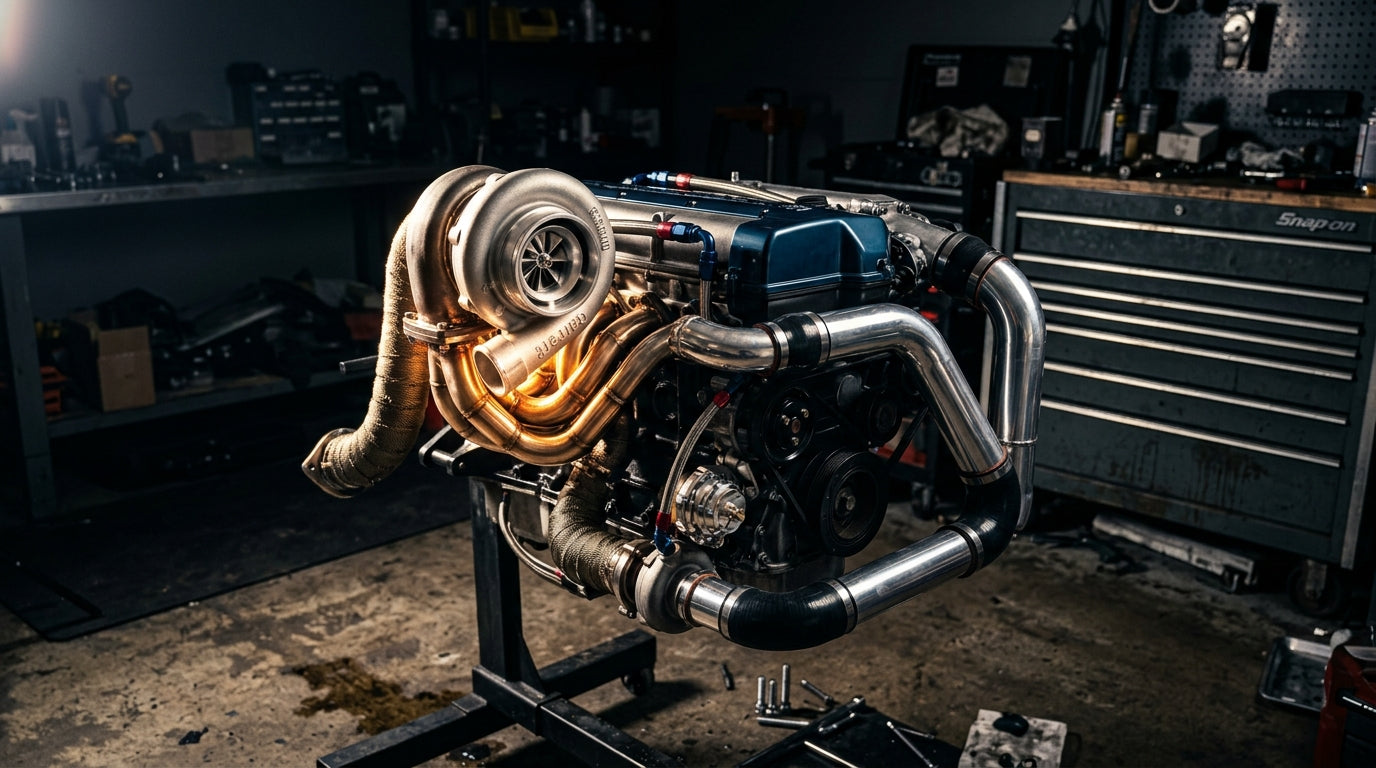
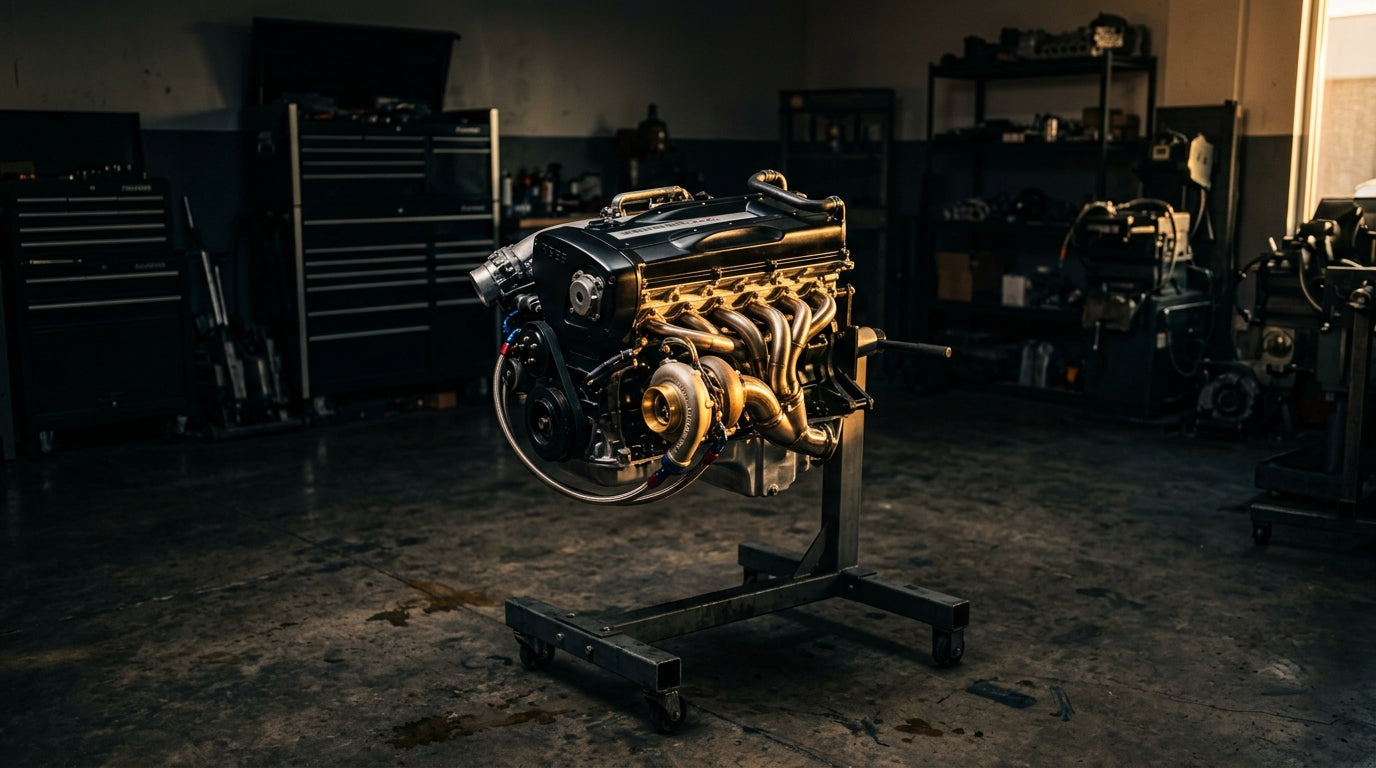
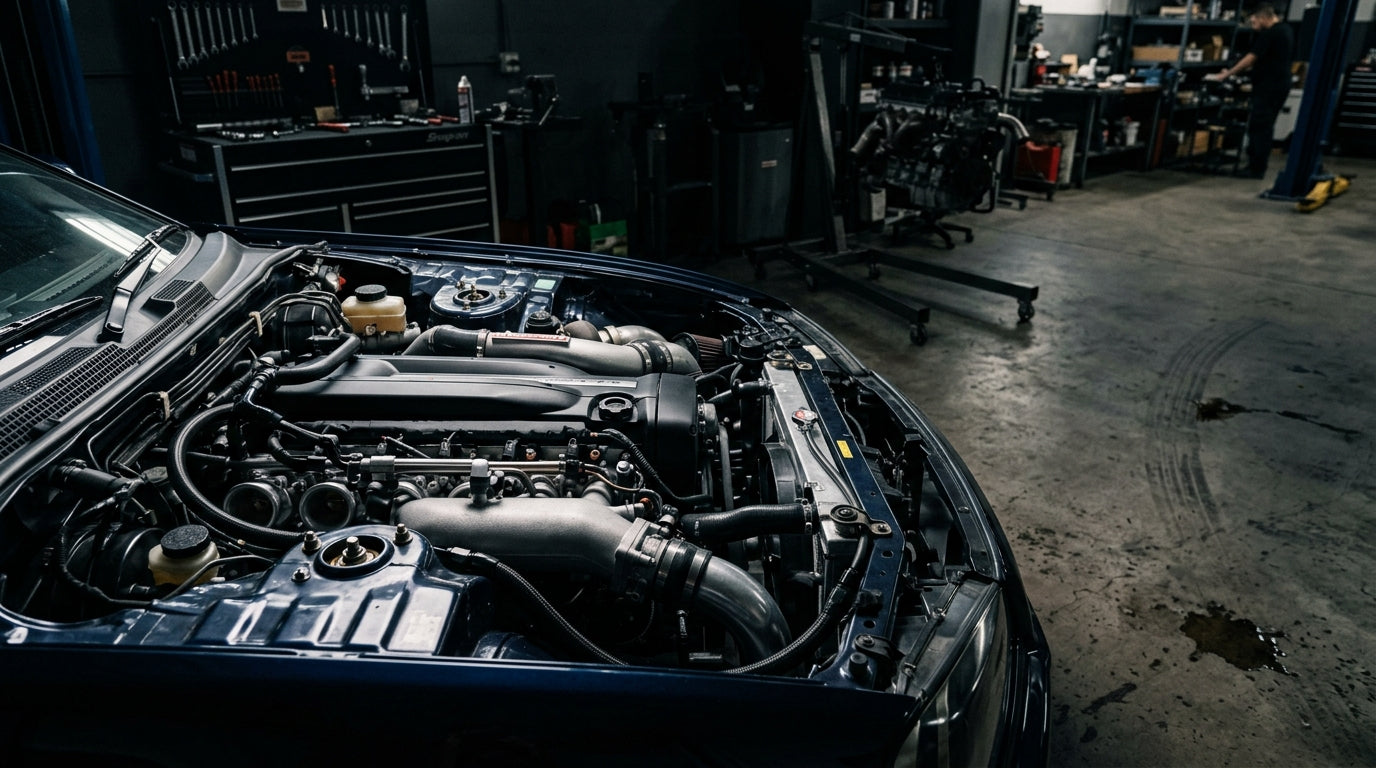
Turbocharged builds start with engine selection. The engine you choose determines how much power you can reliably make, how much supporting work the build requires, and what the ceiling looks like before you need to open the engine. This guide ranks the best JDM engines for turbo builds based on bottom-end strength, aftermarket ecosystem depth, and practical power ceiling.
Browse our JDM engine inventory
Browse our JDM engine inventory →
What makes a JDM engine good for a turbo build
Before selecting a platform, confirm engine fitment for your target chassis — some of these engines (especially the 2JZ and SR20) require chassis-specific mount kits and swap harnesses that vary significantly in cost and complexity. Always consult a certified mechanic to confirm fitment for your specific vehicle.
Before selecting a platform, confirm engine fitment for your target chassis — some of these engines (especially the 2JZ and SR20) require chassis-specific mount kits and swap harnesses that vary significantly in cost and complexity. Always consult a certified mechanic to confirm fitment for your specific vehicle.
The most important factors, in order:
- Bottom-end strength: can the block and crankshaft handle the increased cylinder pressure from boost without requiring forged internals at moderate power levels?
- Aftermarket depth: are turbo kits, manifolds, intercoolers, injectors, and engine management solutions widely available and well-documented for this specific platform?
- Head flow potential: can the cylinder head support the airflow needed at target power levels, or does it require porting and larger valves?
- Thermal management: oil and coolant routing for a turbo application; some engines need additional oil cooling to run safely under sustained boost.
Top JDM turbo platforms
2JZ-GTE: the reference platform
The Toyota 2JZ-GTE is the textbook answer to "which JDM engine is best for high-power turbo builds." Its cast iron block, seven main bearing journals, and forged internals from the factory make it exceptionally capable at high boost levels without opening the engine. Documented 500–600+ hp on stock internals is well-established. The aftermarket is enormous and global. Current stock: approximately $1,899. If you're building a purpose-built high-power platform and the 2JZ fits your chassis, it's the most proven choice. See our 2JZ deep dive.
Nissan SR20DET: compact turbo performance
The SR20DET (2.0L turbocharged from the JDM 180SX, Silvia S13/S14/S15) is the preferred turbo platform for 240SX-based builds and S-chassis performance. It's compact, very well-supported, and capable of 300–400 hp on stock internals with supporting modifications. At higher power levels the SR20 block benefits from sleeving, but for 240SX builds in the 250–350 hp range it's an excellent choice. Current stock: $2,199–$6,499 reflecting its performance premium.
Subaru EJ257: the STI turbo platform
The EJ257 is Subaru's highest-output factory boxer, used in the WRX STI. The STI closed-deck block provides stronger cylinder support under boost than the WRX open-deck EJ255. Practical ceiling on stock internals: approximately 350–400 hp with supporting bolt-ons and an appropriate tune. Beyond that, forged internals are the recommended path. Current stock: approximately $4,899. See our EJ255 vs EJ257 comparison.
Honda K20A: NA-derived high-RPM turbo
The K20A's high-flow cylinder head (DOHC i-VTEC) makes it a capable naturally aspirated engine that responds well to forced induction on the top end. It's not a traditional "turbo engine" — the K20A wasn't designed around boost — but the aftermarket ecosystem for turbocharged K-series builds is mature and well-documented. A stock-block K20A can support 350–450 hp with appropriate management. Beyond that, closed-deck block upgrades or a built short block are the next step. Current stock: $749–$1,749.
Comparison table
| Engine | Safe stock-block power | Price range | Aftermarket |
|---|---|---|---|
| 2JZ-GTE | 500–600+ hp | ~$1,899 | Massive, global |
| SR20DET | 300–400 hp | $2,199–$6,499 | Very mature, S-chassis focused |
| EJ257 (STI) | 350–400 hp | ~$4,899 | Mature Subaru ecosystem |
| K20A | 350–450 hp | $749–$1,749 | Mature K-series ecosystem |
Frequently asked questions
Can I turbo a naturally aspirated JDM engine?
Technically yes, but the feasibility depends heavily on the compression ratio of the NA engine and the availability of engine management solutions. High-compression NA engines (like the K20A at 11:1) need careful tuning and lower boost levels to avoid knock. Low-compression engines tolerate more boost. The aftermarket depth for turbocharged conversions matters enormously — a platform with no established forced-induction aftermarket is an expensive research project. For known issues to watch for by engine family, see our common JDM engine problems guide.
Is the 2JZ worth the higher chassis difficulty for a non-Supra build?
The 2JZ's power ceiling is unique among JDM engines, but the swap complexity scales with how different the target chassis is from the original Supra. Many builders accept significant fabrication work because no other engine in this price range offers the same documented high-power headroom on stock internals. Decide based on your actual power goal — if 400 hp is your ceiling, the 2JZ's advantages over an SR20 or K20 are less relevant.
What supporting mods does a turbo JDM build need?
At minimum: intercooler, boost controller, upgraded fuel injectors, wideband O2, and engine management (either a reflash or a standalone ECU). At higher power levels: upgraded fuel pump, larger fuel lines, oil cooler, and heat management for the engine bay. The specific list varies by engine and target power level. Our swap parts list covers the universal supporting components that apply to any JDM engine installation.
Is the EJ207 worth it over the EJ257 for a turbo build?
The JDM EJ207 is Subaru’s 2.0L closed-deck turbocharged boxer (JDM STI); the EJ257 is the 2.5L variant used in USDM/JDM STI applications. For high-output builds, the EJ257’s 2.5L has more thermal headroom. For track builds where weight matters, some builders prefer the EJ207’s lighter rotating assembly. Either way you’re working within the same Subaru tuning ecosystem. See our EJ255 vs EJ257 comparison for the detailed spec breakdown, and our reliability guide for long-term ownership expectations.
Is the EJ207 worth it over the EJ257 for a turbo build?
The JDM EJ207 is Subaru’s 2.0L closed-deck turbocharged boxer (JDM STI); the EJ257 is the 2.5L variant used in USDM/JDM STI applications. For high-output builds, the EJ257’s 2.5L has more thermal headroom. For track builds where weight matters, some builders prefer the EJ207’s lighter rotating assembly. Either way you’re working within the same Subaru tuning ecosystem. See our EJ255 vs EJ257 comparison for the detailed spec breakdown, and our reliability guide for long-term ownership expectations.
Shop performance JDM engines
Browse 2JZ engines, K20A engines, WRX & STI engines, and all JDM engines for sale. Before you install: installation checklist • break-in procedure • shipping guide.