Cart
0
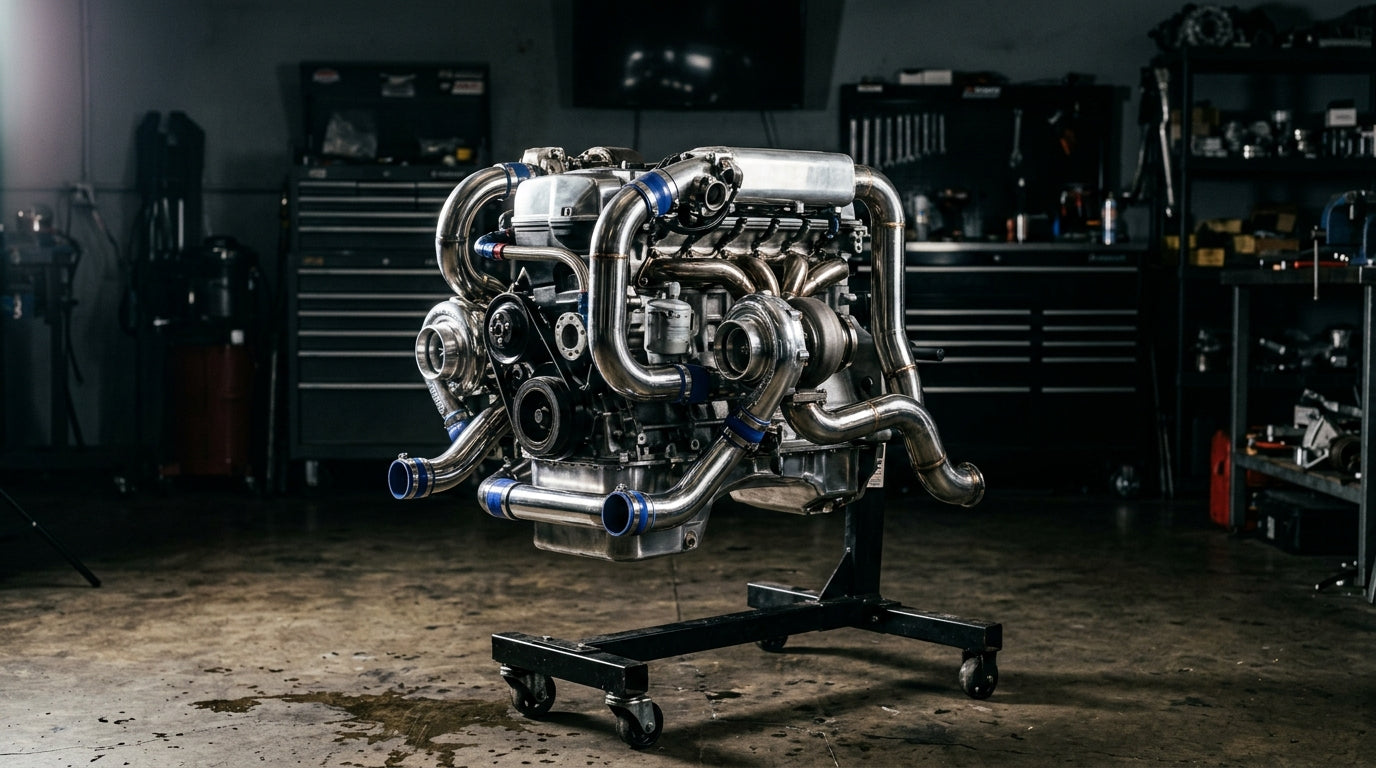
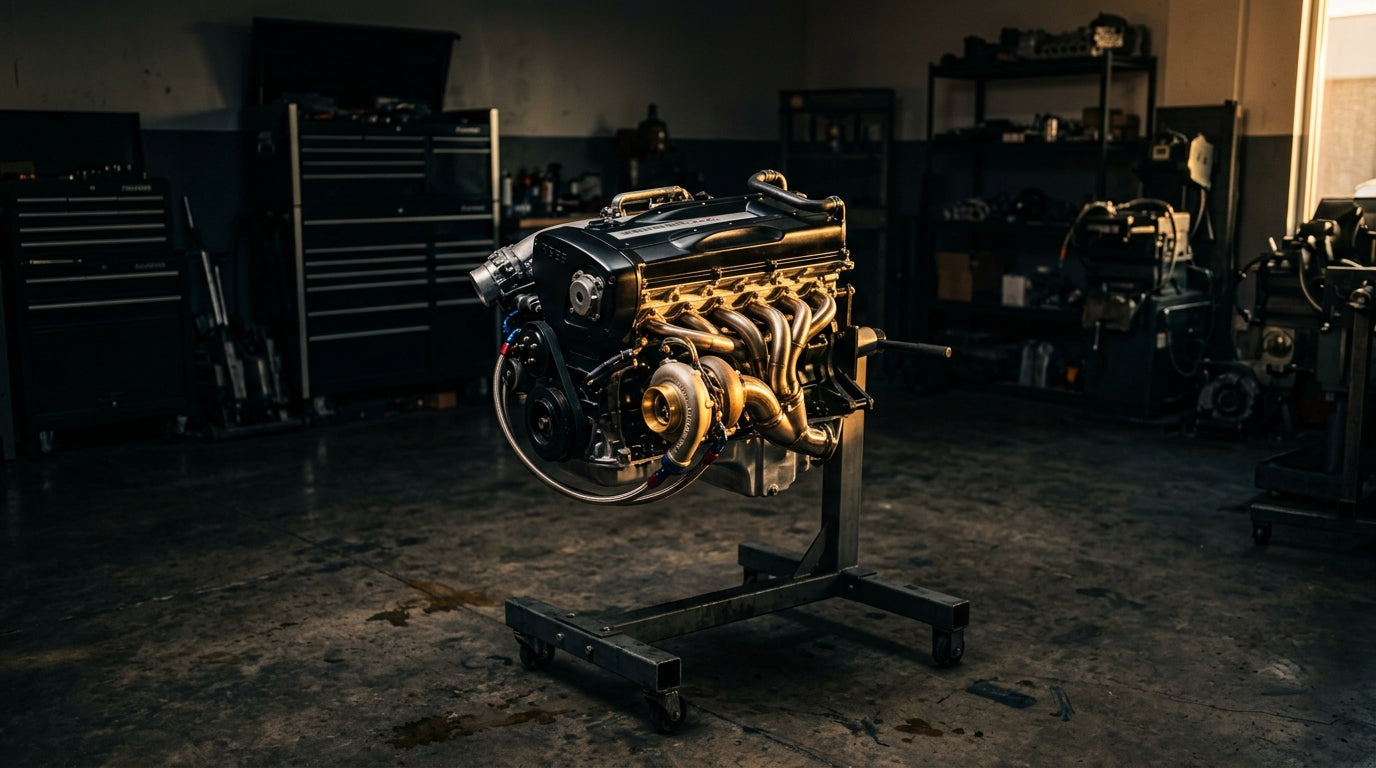
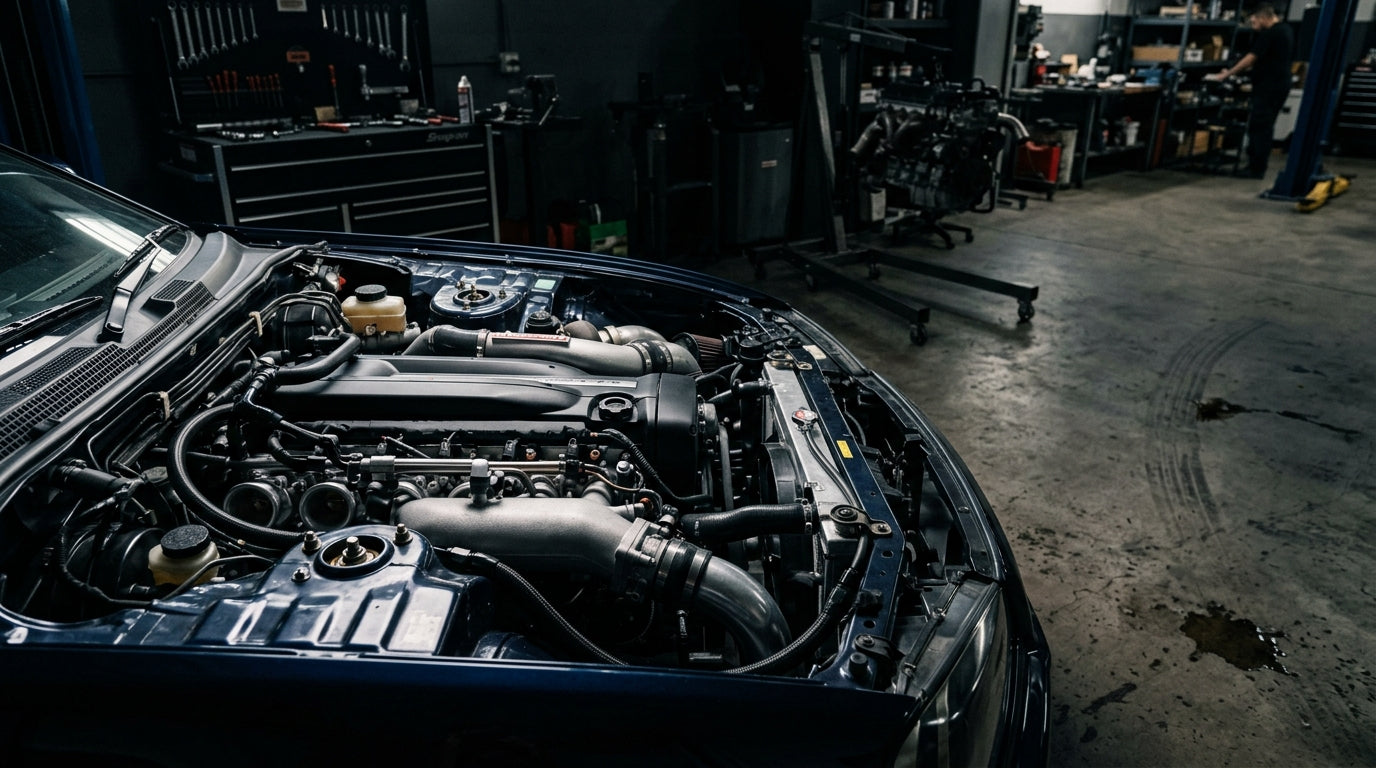
The Toyota 2JZ is arguably the most famous inline-six in import tuning history — and it comes in two fundamentally different forms that share a name but not an application. The 2JZ-GE is naturally aspirated; the 2JZ-GTE is the twin-turbocharged variant. Confusing the two is an easy and expensive mistake. Here's the complete breakdown. This post is part of our engine codes guide. For the full Toyota/Lexus engine lineup, see our JDM Toyota & Lexus engines guide.
Ready to find your 2JZ? Browse our JDM engine inventory →
The core difference: turbocharged vs. naturally aspirated
The suffix tells you everything: GE = naturally aspirated (no turbo); GTE = twin-turbocharged. Both are 3.0L DOHC inline-six engines with the same fundamental block architecture, but they're tuned completely differently from the factory and are not interchangeable without significant supporting work.
Specs comparison
| Spec | 2JZ-GE | 2JZ-GTE |
|---|---|---|
| Induction | Naturally aspirated | Sequential twin-turbo |
| Compression | 10.0:1 | 8.5:1 (lower for boost) |
| Factory output (JDM Supra) | ~220–225 hp | 320 hp (claimed; widely believed to be conservative) |
| VVT-i | Later units (post-1997) | Later units (post-1997) |
| Primary vehicles | Supra NA, Lexus GS300, IS300, SC300 | Supra TT (A80), Aristo (JDM) |
Why the 2JZ-GTE became a legend
The GTE's reputation in the aftermarket comes from two things: the iron block and a forged crank that can handle enormous power levels well beyond factory spec, and the sequential twin-turbo setup that's relatively easy to replace with a larger single turbo. The 2JZ-GTE consistently tops lists of the best JDM engines for turbo builds. "Built 2JZ" engines making 600–1,000 hp are not mythological; with the right supporting parts, the factory bottom end tolerates levels of power that would destroy most comparable engines.
Why the 2JZ-GE is overlooked but useful
The GE doesn't get the same attention, but it's a legitimate engine for several applications: the Lexus GS300 and IS300 community uses it for naturally aspirated builds, and because the block architecture is shared with the GTE, the GE is also used as a base for single-turbo conversions (since a GE is much easier to source than a GTE at any given moment). The GE's 10:1 compression means you'd need to drop compression for a serious turbo build, but mild forced induction on a GE is well-documented.
Fitment and sourcing considerations
The GTE and GE share the same block architecture, so many ancillary parts — oil pan, timing belt, water pump, alternator bracket — are interchangeable. The big differences are the turbos, intercooler piping, the lower-compression pistons, and the ECU/fuel system. Converting a GE to GTE spec is a real project, not a simple swap, and sourcing a GTE directly is usually the more straightforward path if that's your target application.
Current pricing
From our current stock, 2JZ engines run approximately $1,899 for available units. GTE units typically command a premium over GE because of demand from the performance community; confirm which specific variant you're purchasing before buying. Before committing, review our pre-purchase checklist. See our cost guide for more context.
Frequently asked questions
Is a 2JZ-GTE a direct swap into a 2JZ-GE chassis?
The block footprint is the same, so mechanically it fits — but you'll need to address the turbos, intercooler piping, fuel system, and ECU. It's a manageable project â consult a certified mechanic to confirm fitment and review our installation checklist before you start.
How do I tell a GE from a GTE by looking at the engine?
The most obvious visual tell is the twin turbochargers on the GTE — you'll see the exhaust manifold feeding them on the passenger side of the engine. A GE will have a more conventional single-intake manifold appearance with no turbo hardware.
Is the 2JZ still worth buying in 2025?
For performance builds, yes — the bottom-end strength of the GTE block remains difficult to match at its price point, even compared to modern alternatives. For a simple commuter replacement in a GS300 or IS300, a GE is a sensible, durable option.
Shop 2JZ and Toyota engines
Browse our 2JZ engines and the full Toyota engine lineup. For a broader look at how Toyota codes work, see our engine codes guide. See all JDM engines for sale.