Cart
0
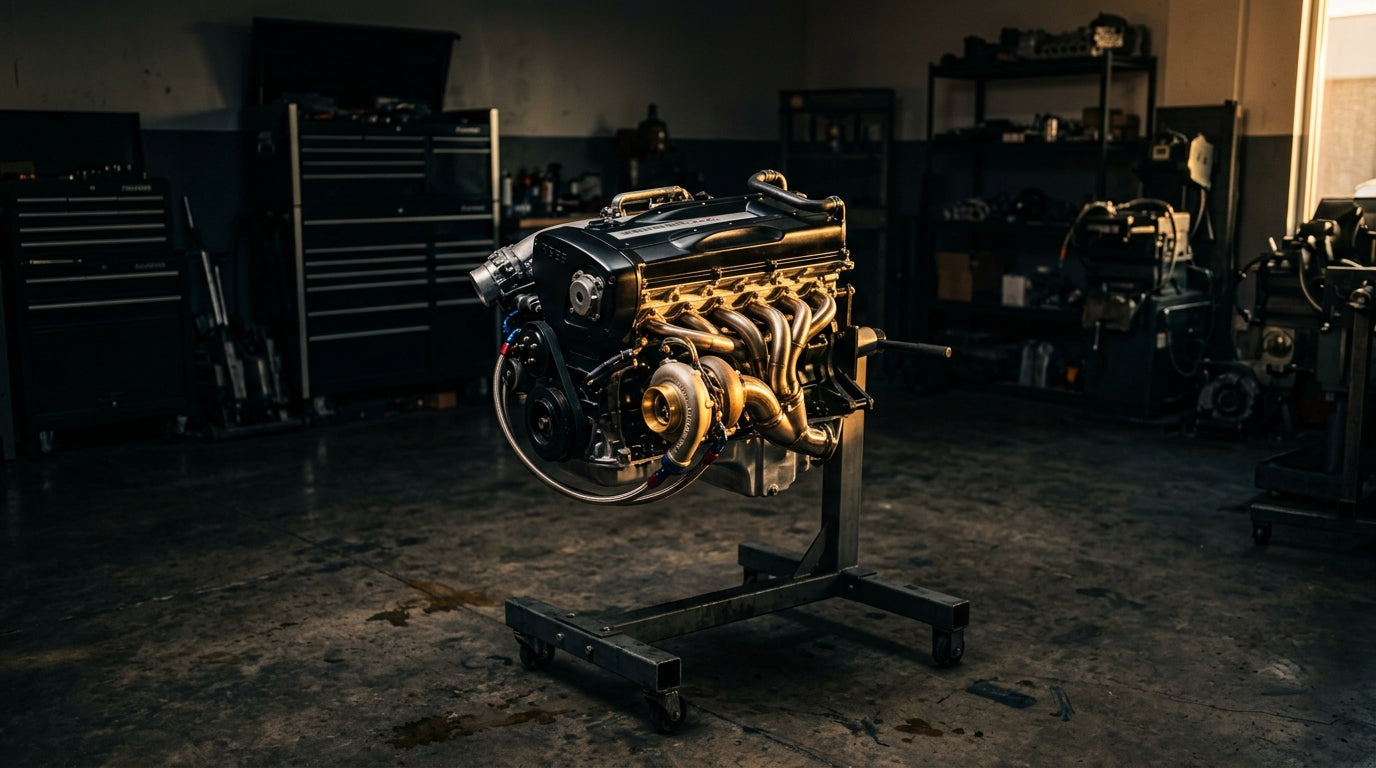
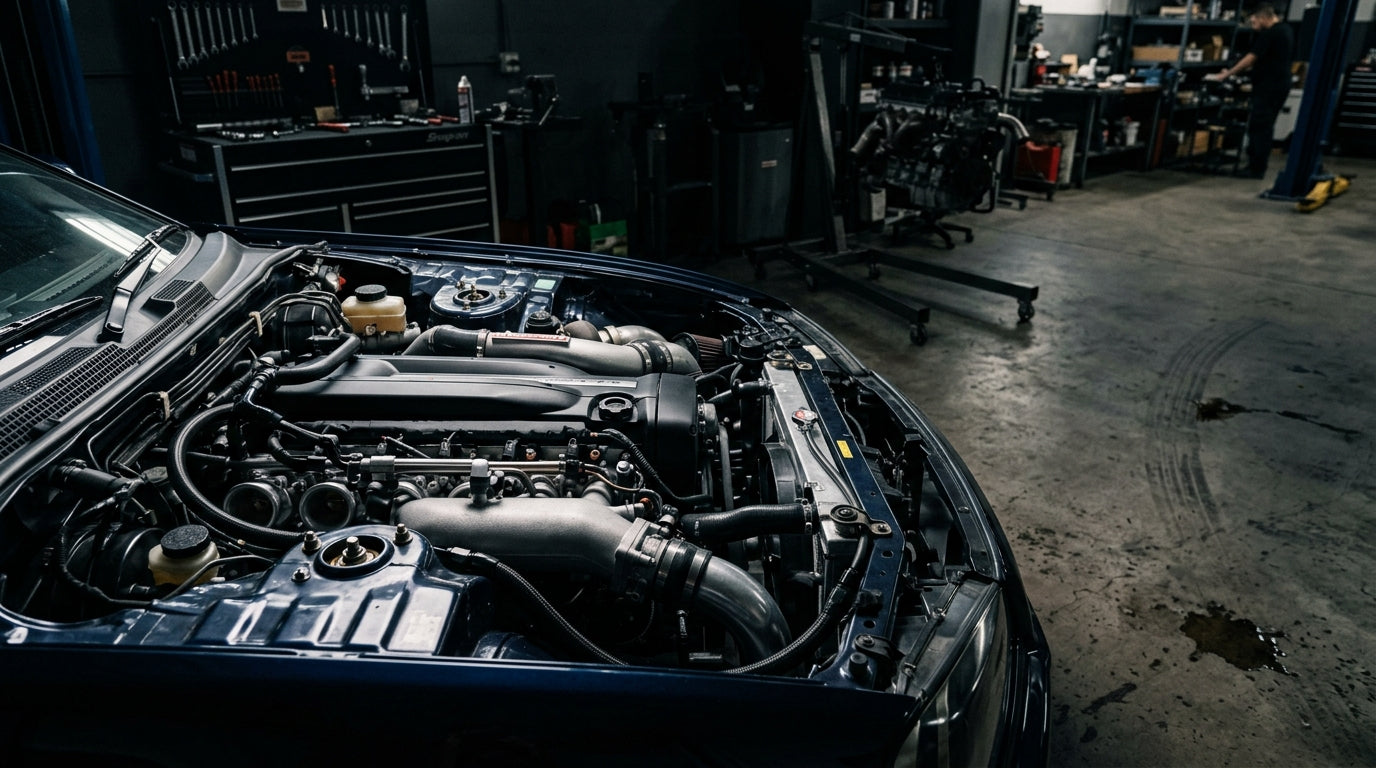
Unlike U.S. marketing names, JDM engines are almost always identified by a manufacturer code rather than a trim name. Once you know how to read them, these codes tell you the engine family, generation, and sometimes the exact configuration before you ever look at a spec sheet. This post is part of our complete guide to JDM engines.
Honda / Acura
Honda codes generally follow a letter-number-letter pattern, e.g. K20A. The leading letter marks the engine family (K-series, J-series V6, B-series, D-series, F-series, R-series), the number roughly tracks displacement in liters ×10, and the trailing letter/number marks the specific variant — this is the part that's easy to gloss over but often carries the biggest difference in output, as we cover in JDM vs. USDM engines.
| Code | Family / notes |
|---|---|
| K20A | 2.0L DOHC i-VTEC inline-4, K-series |
| K24A | 2.4L DOHC i-VTEC inline-4, K-series |
| J35A | 3.5L V6, J-series |
| J37A | 3.7L V6, J-series |
Shop the full Honda engines lineup. For buying guidance on each Honda engine family, see our JDM Honda engines buyer's guide.
Nissan / Infiniti
Nissan's VQ family (e.g. VQ35DE, VQ37VHR) covers most of their modern V6 lineup, shared across Nissan and Infiniti badges — the same physical engine is often sold under both names depending on which vehicle it was pulled from. The letters after the displacement number describe technology like DOHC or VVEL (variable valve event and lift).
| Code | Family / notes |
|---|---|
| VQ35DE | 3.5L V6, 350Z/G35/Altima/Maxima |
| VQ35HR | Revised 3.5L V6, later 350Z/G35/G37 |
| VQ37VHR | 3.7L V6, G37/M37/370Z/Q50 |
Shop the full Nissan engines lineup. For the full VQ, SR, and RB family overview, see our JDM Nissan & Infiniti engines guide.
Toyota / Lexus
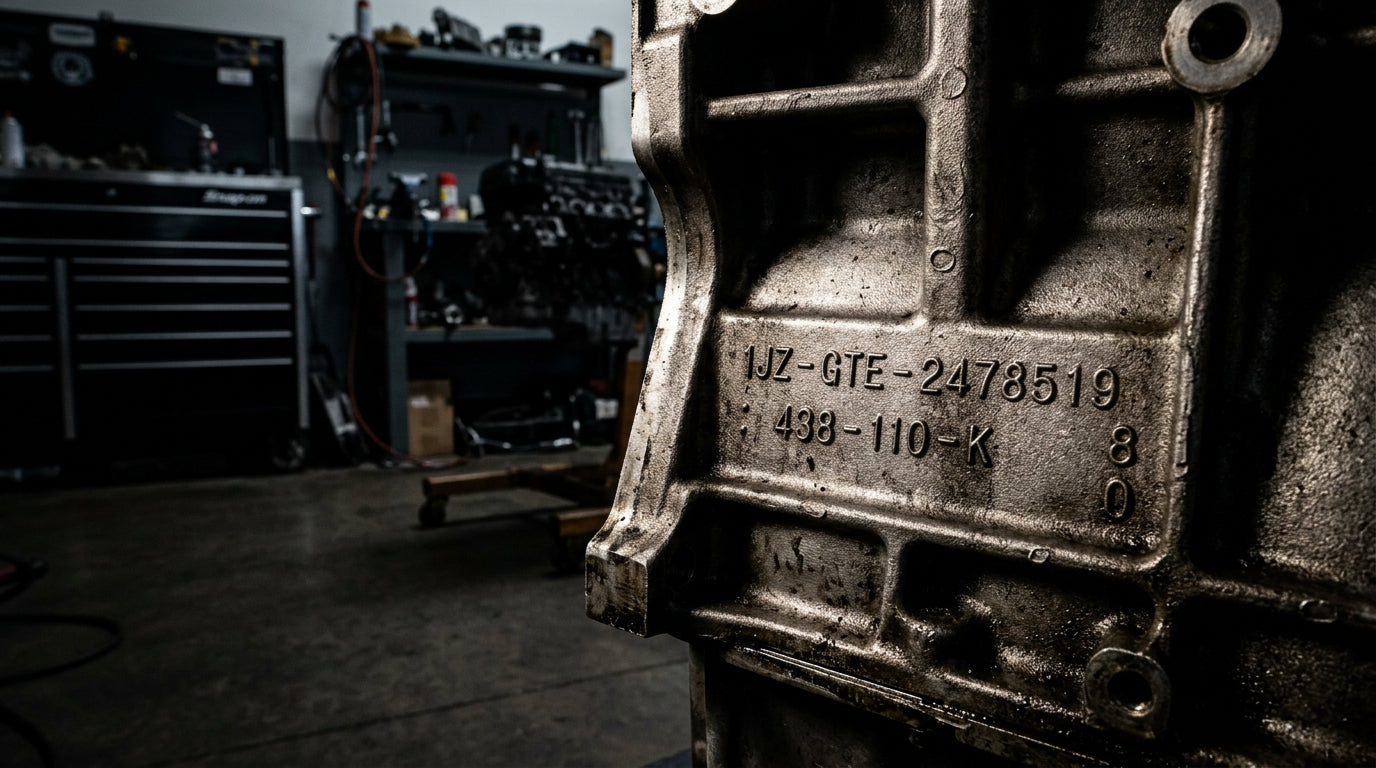
Toyota codes are usually number-first, like 2JZ-GE or 2GR-FE. The leading number indicates generation within a family, the letters that follow indicate the family (JZ, GR, AZ, MZ, ZZ, and more), then valvetrain/fuel delivery details. It's worth double-checking the exact suffix carefully — a 2JZ-GE (naturally aspirated) and a 2JZ-GTE (turbocharged) are dramatically different engines under a similar-looking code.
| Code | Family / notes |
|---|---|
| 2JZ-GE | 3.0L inline-6, naturally aspirated, Supra/SC300/GS300 |
| 2GR-FE | 3.5L V6, Camry/RAV4/Highlander/RX350 |
| 1MZ-FE | 3.0L V6, Camry/Sienna/ES300 |
Shop the full Toyota engines lineup. For model-by-model guidance, see our JDM Toyota & Lexus engines guide.
Subaru
Subaru's horizontally-opposed "boxer" engines fall into families like EJ (older, e.g. EJ255), FA, and FB (newer). The number after the family letters roughly tracks displacement, and later letters mark turbocharging or fuel delivery differences — for instance, "DIT" typically signals direct-injection turbo.
| Code | Family / notes |
|---|---|
| EJ255 | 2.5L turbo boxer, WRX/Legacy GT/Forester XT |
| FA20DIT | 2.0L turbo direct-injection boxer, current WRX |
| FA24 | 2.4L turbo boxer, later WRX/Ascent |
Shop the full Subaru engines lineup. For EJ vs FA vs FB guidance, see our JDM Subaru engines guide.
Mazda & Mitsubishi codes
| Code | Family / notes |
|---|---|
| 13B | 1.3L 2-rotor Wankel rotary, RX-7 |
| L3-VDT | 2.3L turbo inline-4, Mazdaspeed3/6 |
| 4B11 | 2.0L inline-4, naturally aspirated and turbo (Evo X) variants exist — confirm which before buying |
Where to find the code on the engine itself
Most manufacturers stamp or cast the engine code directly onto the block or cylinder head, often near the transmission bell housing or on a machined pad on the block itself. If you're buying sight-unseen, ask the seller for a clear photo of the stamped code rather than relying on the listing title alone — listing titles can occasionally be mislabeled or use shorthand that omits the exact suffix.
Glossary of common suffix meanings
- DOHC — Dual Overhead Camshaft (one cam per valve bank, generally allows higher RPM operation)
- SOHC — Single Overhead Camshaft
- i-VTEC / VTEC — Honda's variable valve timing (and, on some engines, lift) system
- VVT-i — Toyota's variable valve timing system
- DIT / GTE / T — commonly signals a turbocharged variant
- DE / FE / GE — often denotes fuel delivery and valvetrain details specific to that manufacturer's naming convention
Why this matters when you buy
The exact suffix on a code can mean the difference between a naturally aspirated and turbocharged engine, or two very different horsepower figures from what looks like "the same" engine at a glance. Always confirm the full code, not just the family, before purchasing — see our pre-purchase checklist for more.
Frequently asked questions
Do all manufacturers use the same naming logic?
No — each manufacturer has its own internal convention, which is part of why a general reference like this one is useful before you shop across brands.
What if a listing only shows the family code, not the full variant?
Ask the seller for the exact code stamped on the engine block or head. A reputable seller should be able to confirm this before you buy.
Start shopping
Browse our full JDM engine inventory → by make, model, or exact engine code.