Cart
0
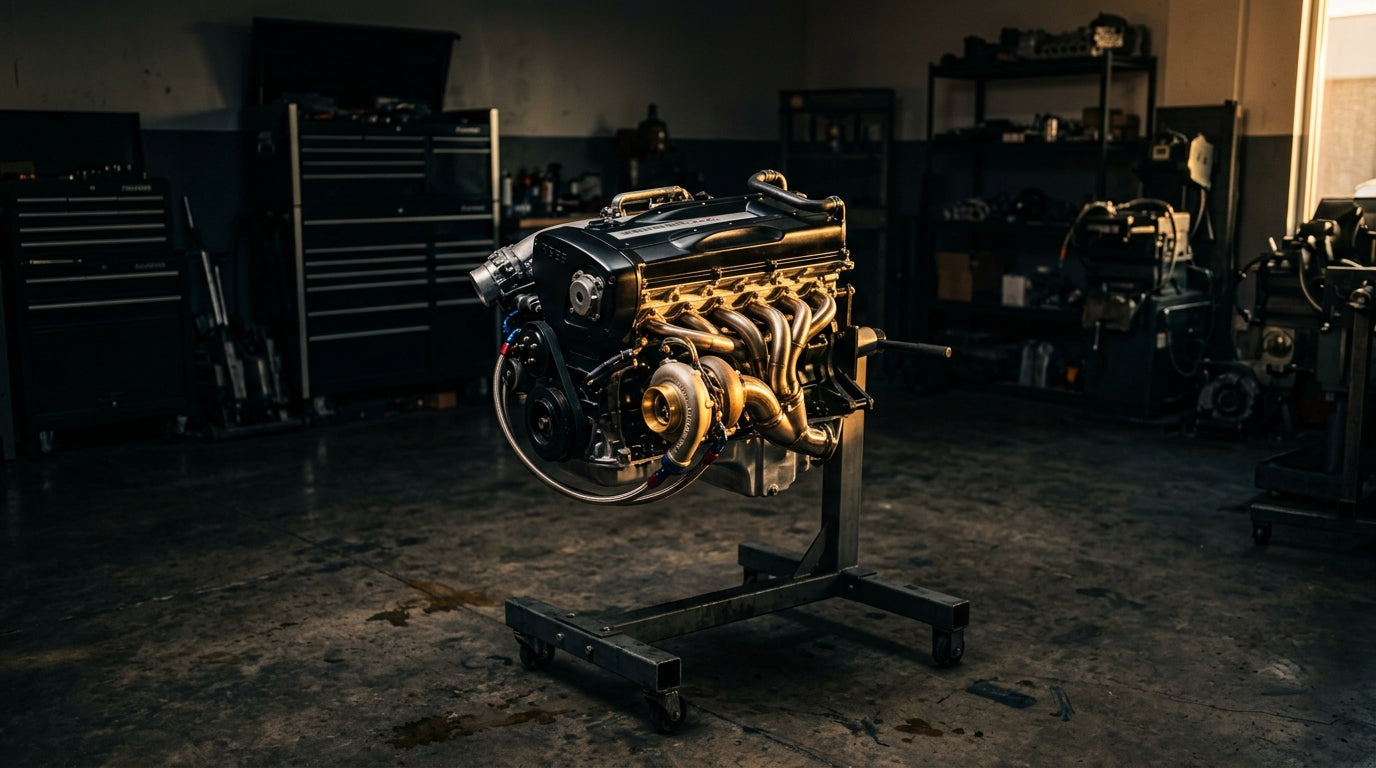
"JDM engine" is one of the most common phrases you'll hear in the import and engine-swap world — but what does it actually mean, and why do enthusiasts and shops alike seek them out? This guide covers everything a first-time buyer needs to know before shopping for a JDM engine for sale: what the term means, why these engines are typically low-mileage, how they get from Japan to a U.S. garage, how to read the code on the valve cover, and how to buy with confidence.
What does "JDM" actually mean?
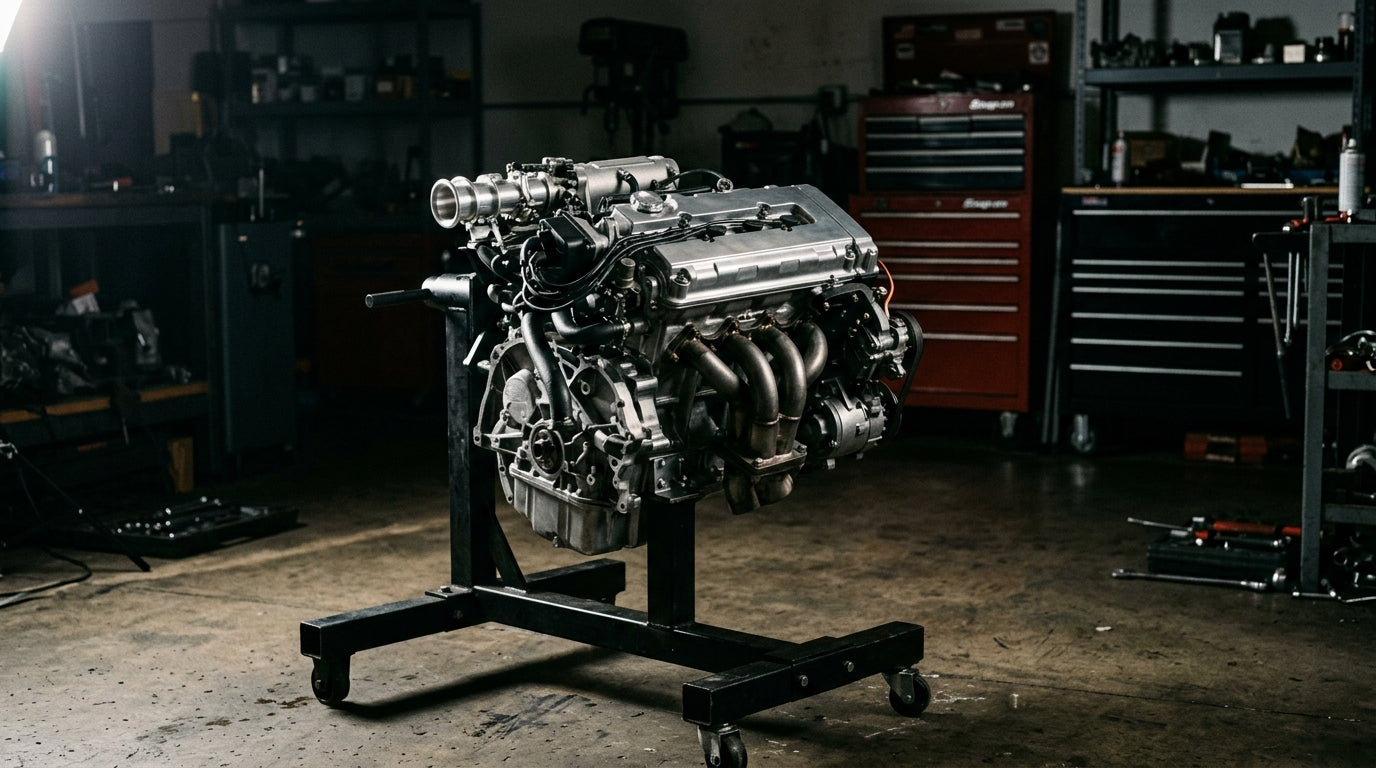
JDM stands for Japanese Domestic Market. A JDM engine is a factory engine that was originally built and sold for cars registered and driven in Japan, then later removed from a donor vehicle once that car reached the end of its usable road life there. It is not an aftermarket part, a reproduction, or a "JDM-style" badge-engineered clone — it's a genuine factory engine, sourced from a Japanese-market car rather than a U.S.-market one.
The term gets used loosely online to describe anything from the engine itself to the whole car it came in ("JDM Skyline," "JDM Civic"), but in the context of engine sales, "JDM engine" specifically means the powerplant — and often the transmission, ECU, and wiring harness that came with it as a matched set.
Ready to shop? Browse our full JDM engine inventory →
Why are JDM engines almost always low-mileage?
Japan's mandatory shaken (車検) vehicle inspection system makes owning an older car progressively more expensive to keep on the road — inspections get stricter and more costly as a vehicle ages. Combined with a car culture that places less economic value on high-mileage vehicles than the U.S. market does, this pushes Japanese owners to trade in, sell, or retire cars well before the engine is anywhere near worn out.
That's the real mechanism behind low JDM mileage — it's a byproduct of Japan's inspection and ownership economics, not a special low-mileage engine variant. We go much deeper on this, including what documentation to look for, in what "low-mileage" really means for a JDM engine.
How is a JDM engine different from a USDM engine?
In most cases the underlying hardware is identical or extremely close to its U.S.-market counterpart — a Honda K20A built for a Japanese-market Civic Type R and a K20A2 built for a U.S.-market Acura RSX Type-S share the same core architecture, block, and head design. The differences usually come down to which specific trim/variant was sold in each market, emissions tuning, and sometimes a meaningfully higher factory output on JDM-only trims. For the full breakdown with real examples, see our guide on JDM vs. USDM engines.
How do JDM engines get from Japan to your garage?
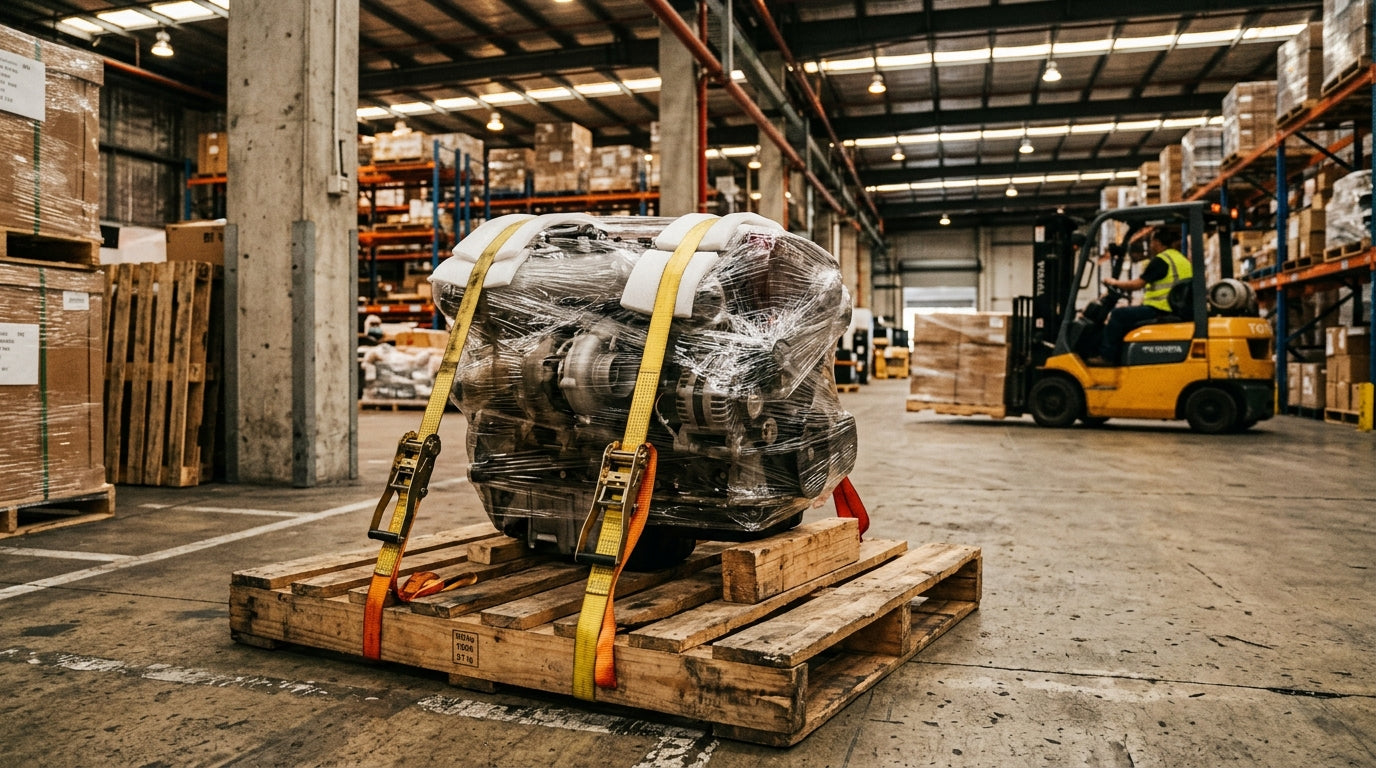
Retired Japanese vehicles are typically sold through large vehicle auctions, graded on condition using a standardized scale, then purchased by export yards that dismantle the car and pull the engine, transmission, and other reusable parts for shipment overseas. We cover the auction grading system, dismantling process, and import pipeline in detail in how JDM engines are sourced from Japan.
How do I know which engine code I need?
Every JDM engine is identified by a manufacturer code — things like K20A, VQ35DE, or 2JZ-GE — rather than a marketing trim name. Understanding this naming system is the single most useful thing you can learn before shopping, since two engines that "sound similar" can be meaningfully different machines. Read our full breakdown, including a reference table of common codes by manufacturer, in JDM engine codes explained.
Common terms you'll see in listings
| Long block | The engine block, head, crankshaft, pistons, and internals — without intake/exhaust manifolds or accessories. |
| Complete/full swap | Engine plus the transmission, wiring harness, and ECU needed to actually run it. |
| ECU | The factory engine control unit — often sold matched to the specific engine/harness to avoid pairing issues. |
| Chassis code | The manufacturer's internal code for the car itself (e.g. DC5, GRB, Z33) — distinct from the engine code. |
| Compression | A design spec of the engine (how much the air/fuel mixture is compressed before ignition) — not something every seller verifies on every unit, so it's worth asking directly if it matters for your build. |
Choosing the right engine for your build
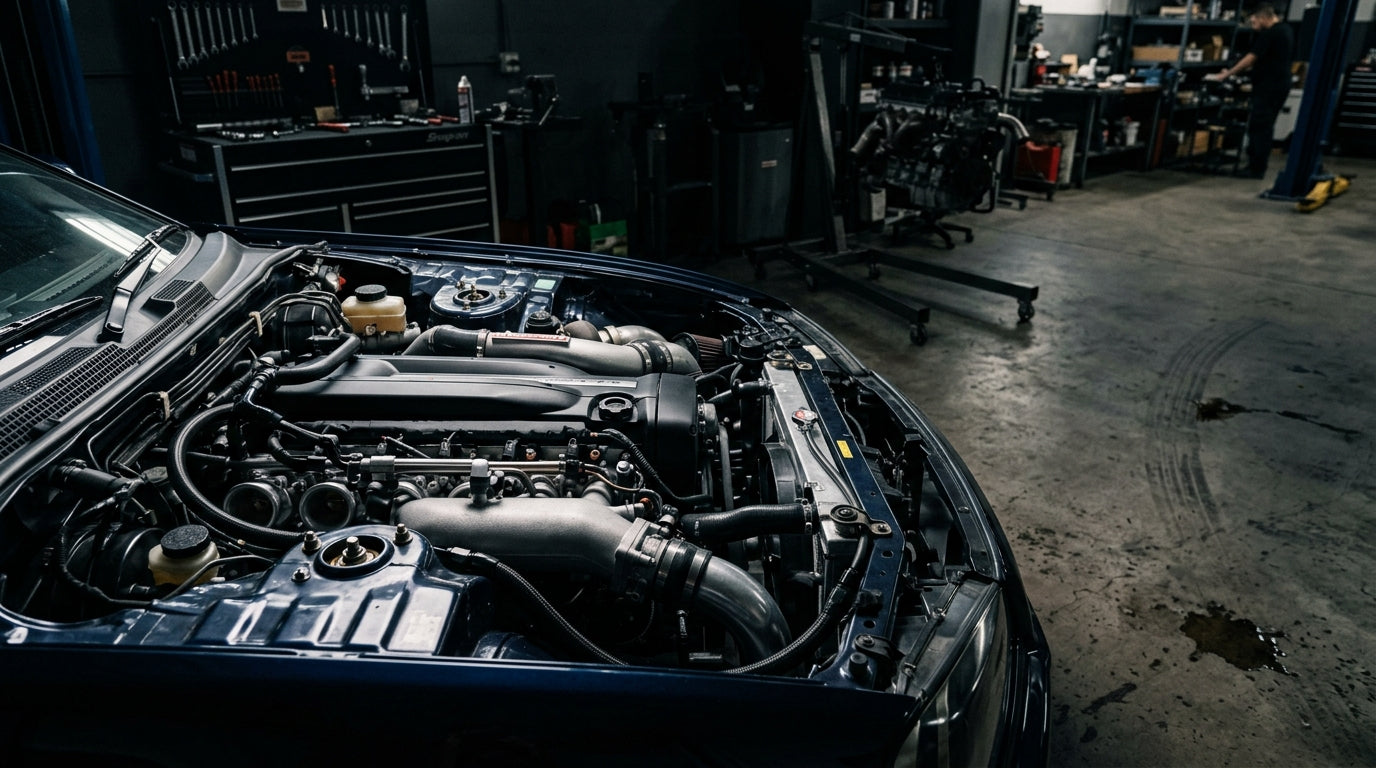
Whether you're doing a factory-spec replacement or a swap into a different chassis, matching the right code, generation, and transmission type matters more than anything else. Browse our current inventory by Honda, Subaru, Nissan, Toyota, and Infiniti engines, or search by your exact model on our JDM engines for sale homepage.
Ready to buy? Start here
Once you know what you're looking for, these guides walk through the practical side of buying: how to choose the right engine, what it should cost, and 10 questions to ask before you buy.
Buying with confidence
At JDM New York, every engine is hand-selected in Japan and backed by our warranty, with fast nationwide shipping. If you're weighing a JDM engine against other options, see our comparison guides on JDM vs. remanufactured engines and whether JDM engines are reliable.
Frequently asked questions
Is a JDM engine the same as a used engine?
All JDM engines are used in the sense that they were previously installed in a donor vehicle, but not all used engines are JDM — a used engine could just as easily be a high-mileage domestic pull from a U.S. junkyard. The "JDM" label specifically means it came from a Japanese-market car.
Are JDM engines legal to install in the U.S.?
Engine swaps are regulated at the state level, and rules vary — some states require the replacement engine to be the same model year or newer than the vehicle, and smog-check states may have additional emissions-equipment requirements. Check your state's specific rules before finalizing a swap plan.
Do JDM engines come with a warranty?
It depends entirely on the seller. Ask specifically what's covered before you buy — see our JDM engine warranty guide for what to look for.
Complete JDM engine resource library
Everything you need to research, buy, install, and maintain a JDM engine, organized by topic:
Engine code deep dives (Cluster C)
- K20A vs K24A: which K-series is right for your build
- VQ35DE vs VQ35HR: the full comparison
- EJ255 vs EJ257: WRX vs STI engine breakdown
- 2JZ-GE vs 2JZ-GTE: naturally aspirated vs turbocharged
- The complete Subaru EJ engine family guide
Make-specific buyer's guides (Cluster D)
- JDM Honda engines: K-series, J-series complete guide
- JDM Nissan & Infiniti engines: VQ, SR, and RB guide
- JDM Toyota & Lexus engines: 2JZ to 2GR buyer's guide
- JDM Subaru engines: EJ vs FA vs FB guide
- JDM Mitsubishi & Mazda engines: 4B11, 13B guide
Installation and compatibility (Cluster E)
- JDM engine swap parts list: everything beyond the engine
- Fitment guide: bolt-in vs modified swaps
- Manual vs automatic transmission for JDM swaps
- Break-in procedure after installation
Reliability and longevity (Cluster F)
- Are JDM engines reliable? An honest assessment
- How long does a JDM engine last?
- Common JDM engine problems by engine family
- Best JDM engines for reliability
Performance builds (Cluster G)
- Best JDM engines for turbo builds
- Best JDM engine swaps: popular and proven combinations
- Best JDM engines under $2,000
- K-series swap guide: K20A vs K24A and what you need
Buying from JDM New York (Cluster H)
- Why buy from JDM New York: sourcing and what sets us apart
- JDM engine shipping explained: order to delivery
- Installation checklist: 20 steps before you start the car
- Are JDM engines worth it? A clear-eyed answer
Browse the full JDM engine inventory or search by make: Toyota • Honda • Subaru • Nissan • Infiniti • Lexus • Acura.