Cart
0
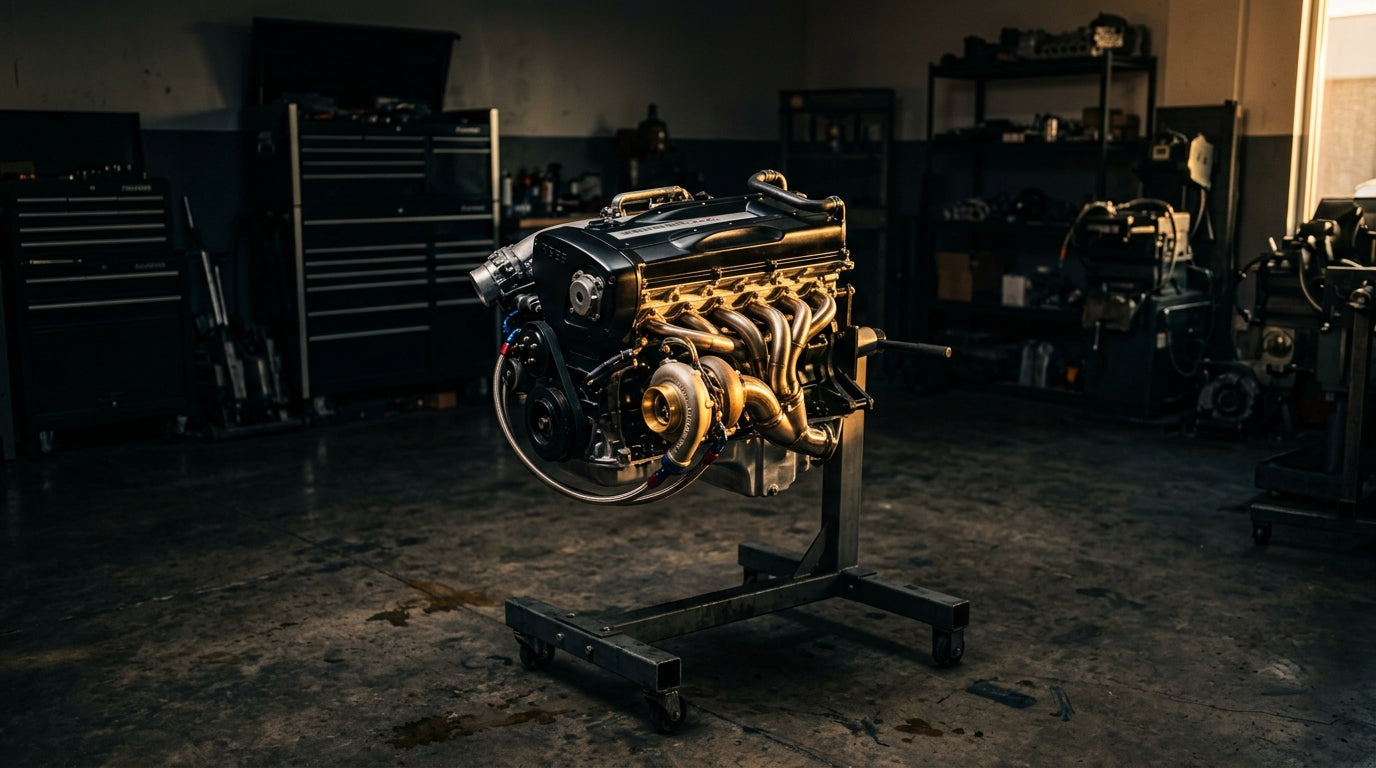
When you source a JDM engine for a replacement or swap, the transmission decision is often treated as secondary — but it's one of the most consequential choices in the build. This guide covers the key considerations for keeping your existing transmission, sourcing a matching JDM unit, or doing a transmission conversion.
Browse our JDM engine inventory
Browse our JDM engine inventory →
Matching transmission to engine: why it matters
The engine and transmission are designed to work together at a specific torque load, with specific gear ratios that affect how power reaches the wheels. A mismatch isn't just a bolt-pattern problem; it affects driveability, clutch/converter sizing, and in some cases whether the ECU can properly communicate with both components.
Scenario 1: Like-for-like replacement (keeping your transmission)
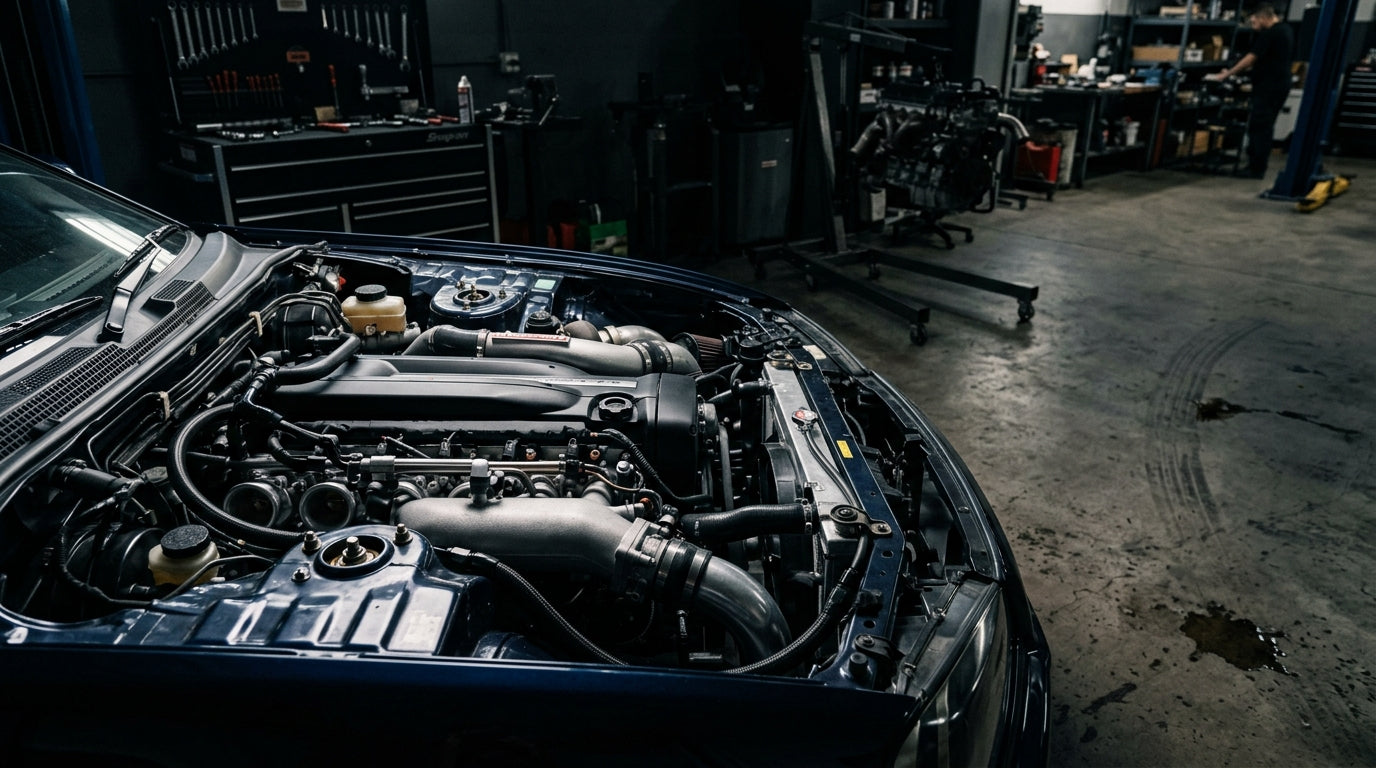
If you're replacing a USDM engine with its JDM equivalent (e.g., USDM WRX EJ205 to JDM WRX EJ205), you almost always keep your existing transmission. The engine-to-transmission interface (bellhousing bolt pattern, pilot bearing, flywheel/flexplate size) is the same. This is the lowest-friction path. You're only changing the engine, not the powertrain architecture.
Scenario 2: Cross-platform swap (sourcing a new transmission)
Cross-platform swaps often require sourcing a transmission alongside the engine. Confirm full engine fitment — mounts, axle lengths, and ECU compatibility — before committing to the engine and transmission combination. Confirm full engine fitment — mounts, axle lengths, and ECU compatibility — before committing to the engine and transmission combination. The K-series swap into a Civic EK is a good example: the engine's bellhousing pattern is specific to the K-series gearbox. Options:
- K24 transmission from a USDM Accord/Element: physically compatible with a K-series engine, widely available, good for street use
- K20 transmission from a JDM Type R or RSX: tighter gear ratios, better matched to high-revving K20A performance
- Cable-to-hydraulic conversion: some older Honda chassis (EG) use a cable-actuated clutch; K-series transmissions are hydraulic, requiring a conversion kit
Manual vs automatic: the conversion question
Some builders use a JDM engine swap as the occasion to convert from automatic to manual (or less commonly, the reverse). This is a significant undertaking — before beginning, review the full installation checklist to make sure all supporting systems are accounted for. The conversion requires:
| Component | What's needed for AT-to-MT conversion |
|---|---|
| Manual transmission | Matching bellhousing to engine, appropriate for chassis tunnel clearance |
| Clutch and flywheel | Flywheel and clutch kit matched to the engine's flywheel register |
| Clutch master/slave cylinders | Full hydraulic clutch actuation system (or cable if applicable) |
| Pedal assembly | Three-pedal assembly (clutch, brake, throttle) — sourced from a manual-equipped donor |
| Shifter and linkage | Tunnel and floor modification often required; depends on chassis |
| ECU and wiring | Many modern automatic cars have AT-specific ECU logic; MT ECU or tune may be required |
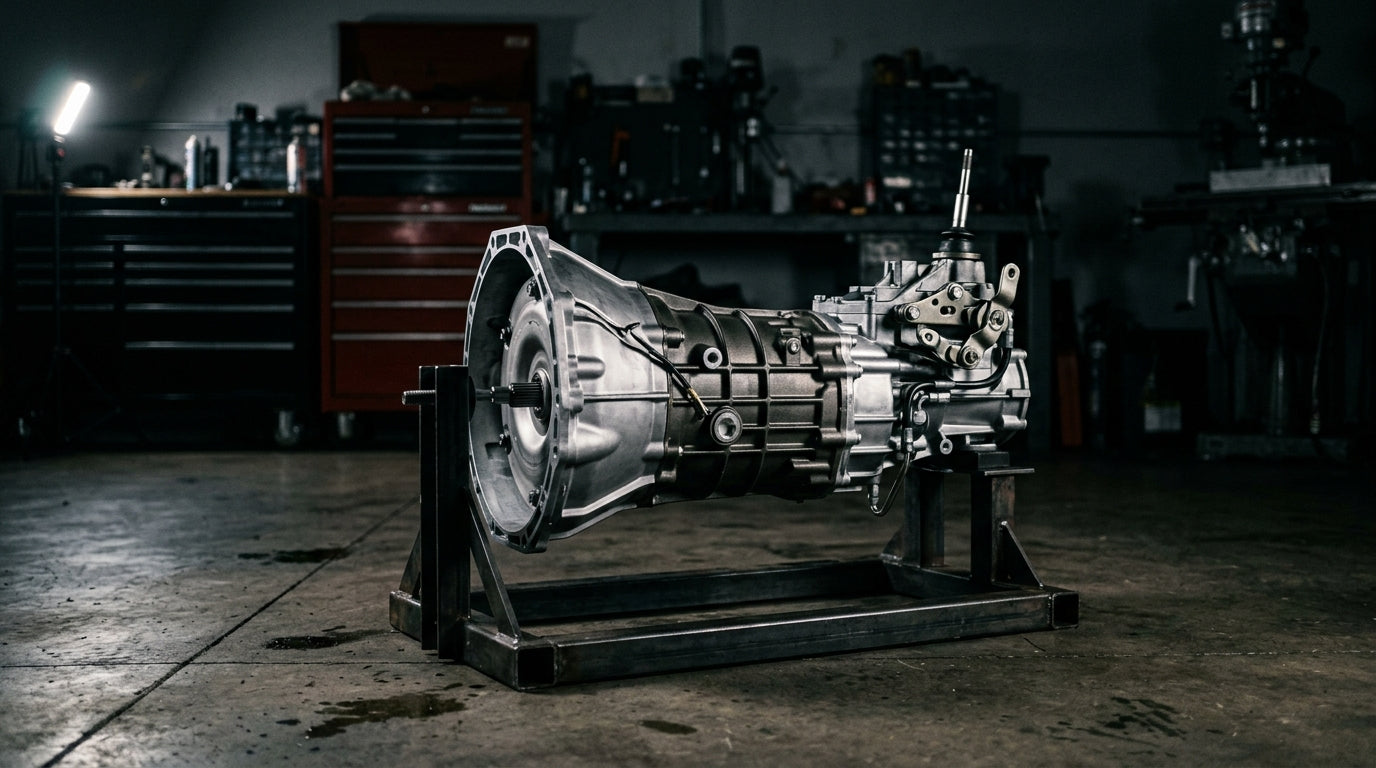
JDM transmissions: what to look for
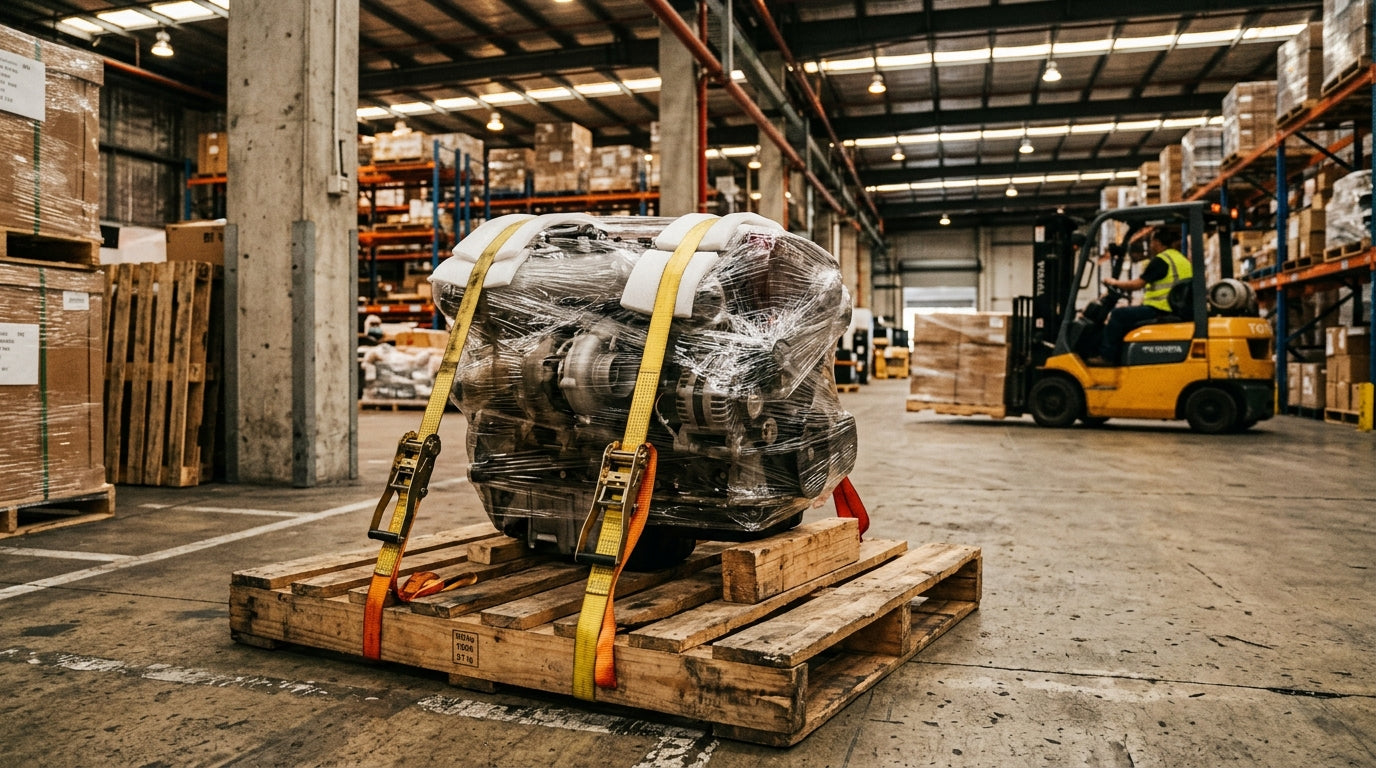
If you're sourcing a JDM manual transmission alongside a JDM engine, the same low-mileage import advantage applies: Japanese domestic market vehicles accumulate lower mileage on average than U.S. equivalents, which means the synchros and shift forks in a JDM-sourced transmission are typically in better condition than a comparable-age USDM unit. Confirm the transmission ratio code if gear ratios matter to your application — the same transmission family often came in different ratio configurations depending on the application year and trim. Once you’re ready to order, our shipping guide covers freight delivery of heavy drivetrain components.
Frequently asked questions
Can I keep an automatic transmission with a JDM engine that originally came with a manual?
In some cases yes, with the correct adapter or crossmember modification, but it's uncommon and usually not advisable unless you have a specific reason. Most JDM engine swaps pair with the manual transmission from the same engine family for simplicity and part availability.
Do JDM transmissions require different fluid than USDM units?
Generally no — the fluid specification follows the transmission design, not the region. Use the fluid specification for your transmission model as found in the factory service manual for your specific chassis. Always change the transmission fluid at the time of install.
Is a JDM transmission worth the added complexity over a USDM unit?
For performance platforms (K-series Type R gearbox, EJ/STI close-ratio 6-speed), yes — the JDM-specific ratio sets offer genuine performance advantages. For a commuter replacement scenario, a USDM transmission in good condition is usually the simpler path.
What’s the best source for a matching JDM manual transmission?
For most K-series and Subaru swaps, the JDM transmission paired with the engine from the same donor vehicle is the cleanest match. For Civic K-swaps, a USDM RSX Type-S transmission (K20A2 6-speed) is widely available and a practical choice that avoids importing a JDM gearbox separately. Always change transmission fluid at install regardless of source, and always consult a certified mechanic to confirm fitment for your specific vehicle. Our swap parts list covers the full supporting components picture including the transmission and drivetrain items.
What’s the best source for a matching JDM manual transmission?
For most K-series and Subaru swaps, the JDM transmission paired with the engine from the same donor vehicle is the cleanest match. For Civic K-swaps, a USDM RSX Type-S transmission (K20A2 6-speed) is widely available and a practical choice that avoids importing a JDM gearbox separately. Always change transmission fluid at install regardless of source, and always consult a certified mechanic to confirm fitment for your specific vehicle. Our swap parts list covers the full supporting components picture including the transmission and drivetrain items.
See more installation guides
Full swap parts list • Fitment guide • Break-in procedure • Installation checklist • Shipping guide • Browse engines in stock