Cart
0
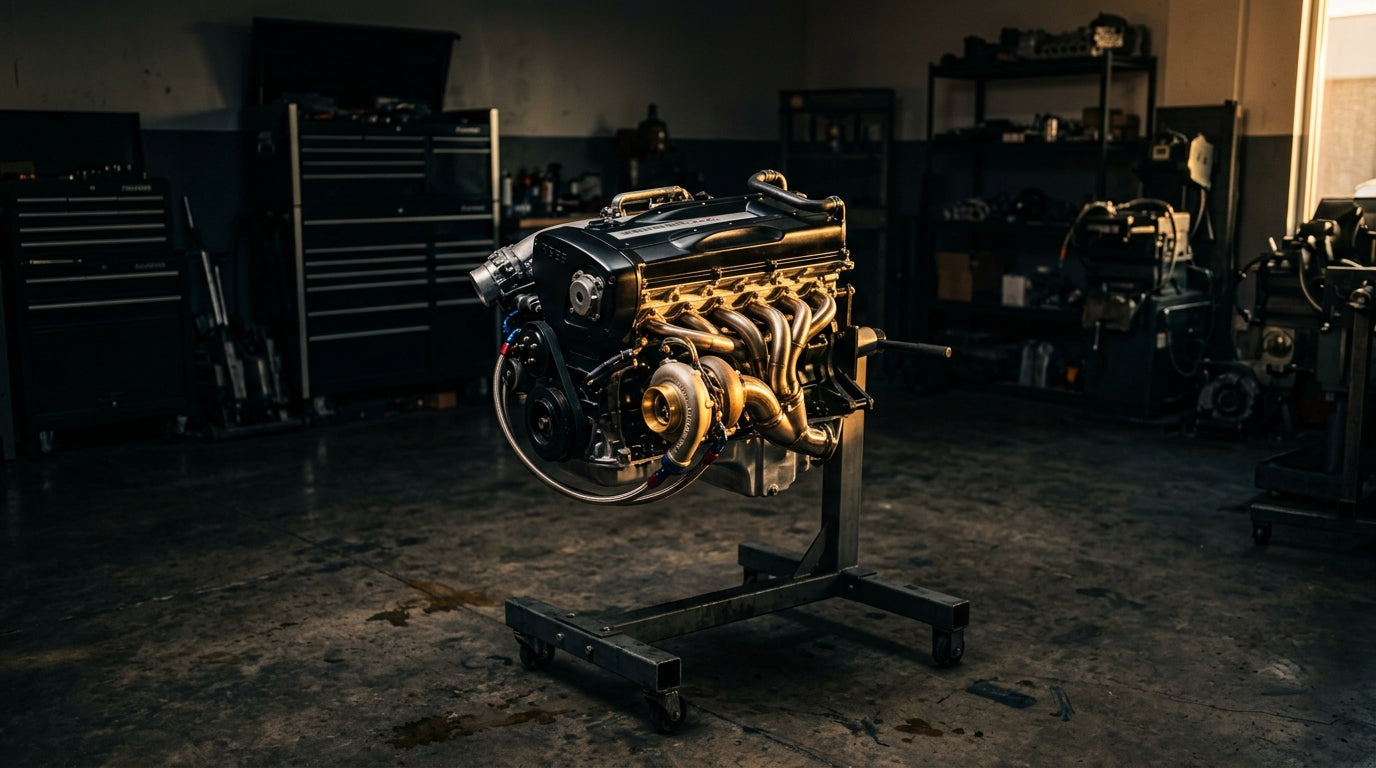
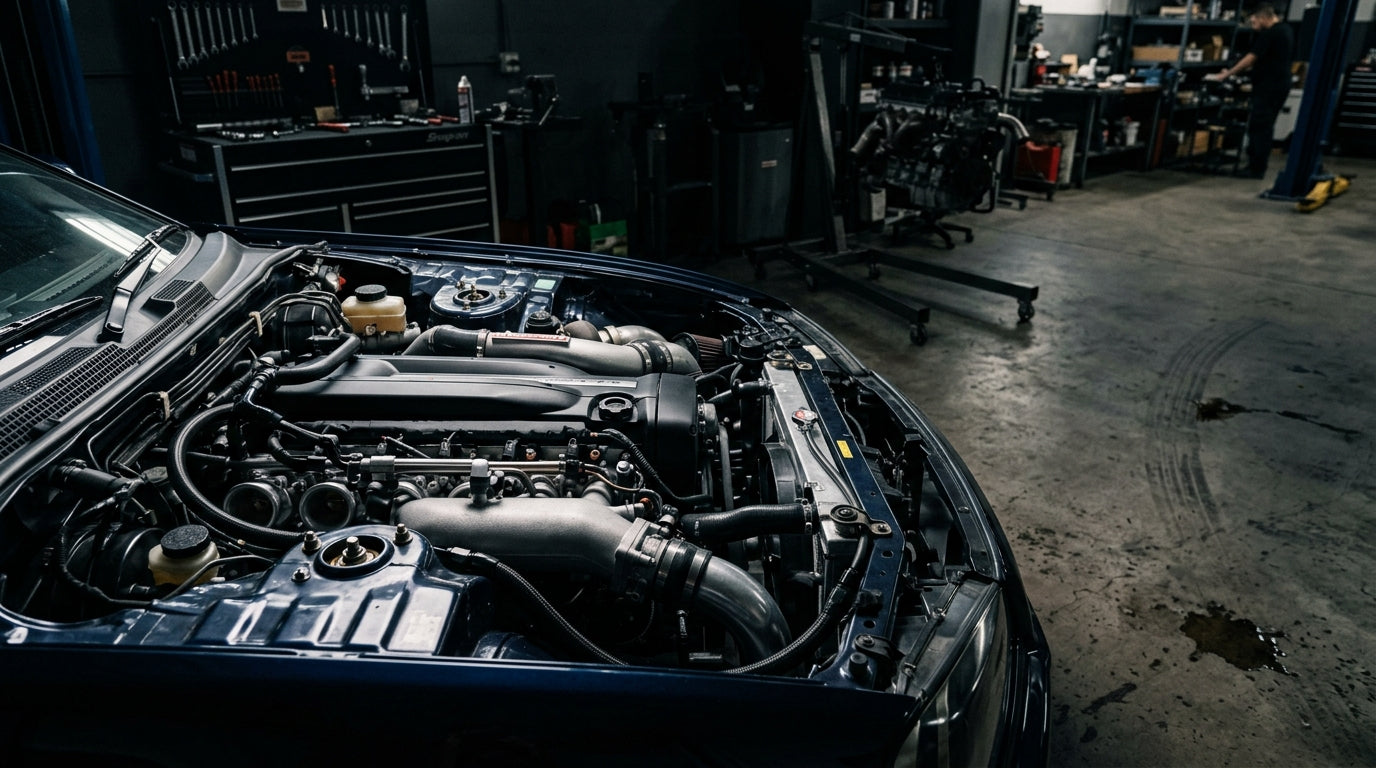
A JDM engine arriving at your door is a starting point, not a complete kit. Most engine swaps require a supporting cast of components that aren't included with a bare engine — and shopping for them after the car is already on stands costs time and money. This guide walks through what you should line up before the swap begins.
Browse our current inventory: JDM engines in stock →
Before finalizing your engine choice, confirm the swap's fitment requirements. Our engine fitment guide explains which swaps require modification vs. more straightforward replacements — consult a certified mechanic to confirm fitment for your specific vehicle.
The core supporting components
These are the items most commonly needed regardless of which engine or chassis you're working with:
Engine mounts
Factory mounts are often chassis-specific, not just engine-specific. A K-series into an older Civic EK chassis, for example, requires aftermarket K-swap mounts designed for that specific fitment. Even like-for-like replacements may benefit from new OEM-spec rubber mounts if the originals are cracked or collapsing — worn mounts transmit excessive vibration and can shift engine alignment under load.
Transmission and drivetrain
Whether you're reusing your existing transmission or sourcing a new one depends on the swap. A direct replacement (same engine family) typically uses your existing transmission. A cross-platform swap — like a K-series into a non-RSX chassis — usually requires sourcing the transmission separately and sometimes an axle pair to match the output shaft location.
ECU and wiring
The ECU (engine control unit) is what tells the engine how to run. For direct platform replacements, your original ECU may work. For engines that were never sold in the U.S. in the same configuration — like a JDM K20A — options include importing the matching JDM ECU and having it tuned, using an aftermarket standalone (Hondata, AEM, etc.), or purchasing a pre-configured reflash from a specialist. Confirm which path makes sense for your specific engine code before you buy — our engine codes guide helps you identify exactly what code you're working with.
Axles and CV joints
Axle length and CV joint spline count vary by engine and differential configuration. Reusing OEM axles from the wrong application is one of the most common assembly mistakes in K-swaps and similar cross-platform installs. Confirm axle compatibility before the engine arrives.
Fluids and gaskets at the point of install
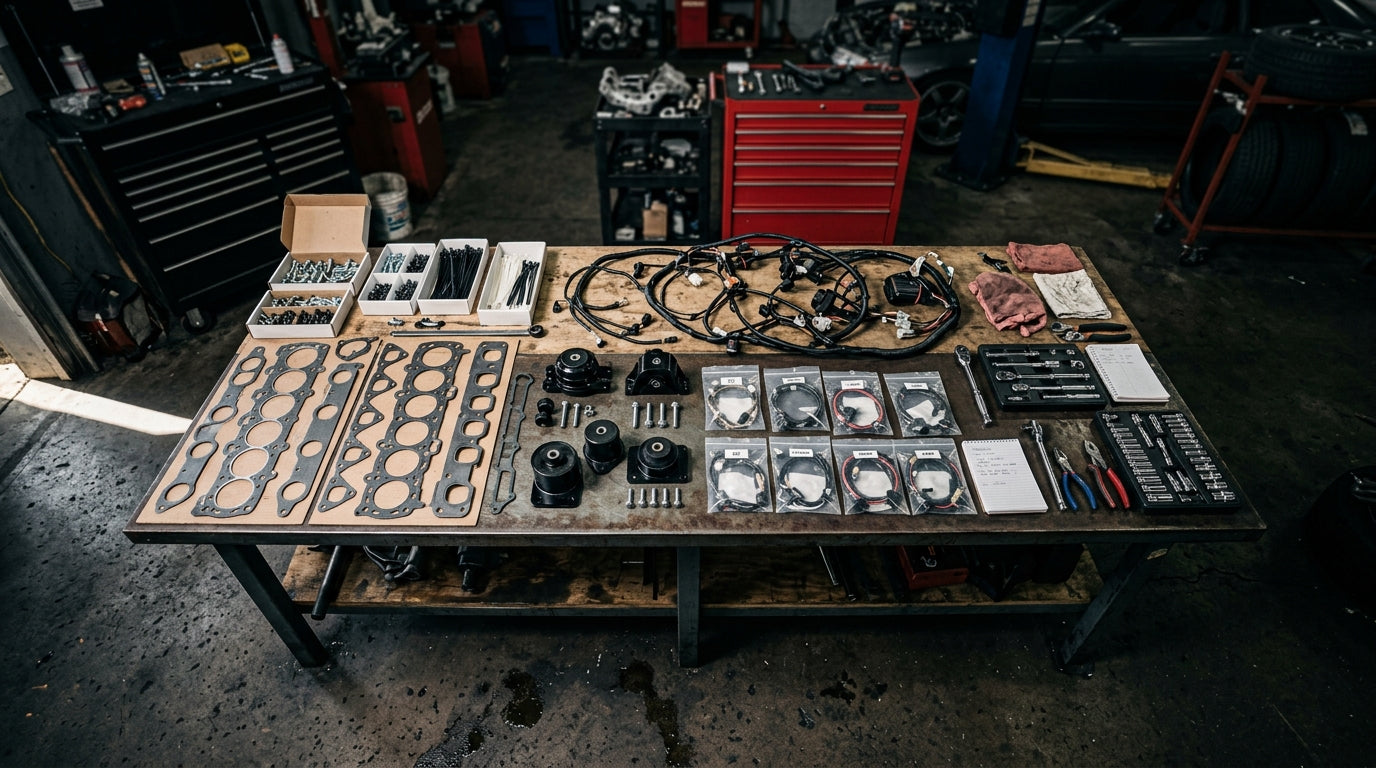
Even a low-mileage JDM engine should be installed with fresh fluids and at least the following gaskets:
- Engine oil and a new oil filter
- Coolant (flush and refill the system)
- Valve cover gasket (cheap, easy, prevents nuisance leaks)
- Intake manifold gasket if the intake is coming off
- Exhaust manifold gasket if you're swapping headers at the same time
- Thermostat and housing O-ring
Intake, exhaust, and accessory fitment
Depending on the swap complexity:
- Intake: may need an adapter or new intake piping if your existing setup doesn't mate to the new throttle body location
- Exhaust: JDM engines may have different header flange patterns or pipe routing than the USDM engine they're replacing — confirm header fitment before assuming bolt-on
- Alternator/power steering: accessory bracket patterns vary; confirm your accessories bolt to the new engine's accessory mounting points
Timing belt or chain service
For engines with a timing belt (most Subaru EJ-series, older Honda B/H-series): if the service interval is unknown, replace it. The cost of a timing belt kit is small compared to the consequence of a snapped belt. K-series and most modern engines use a timing chain that doesn't need scheduled replacement, but inspect it visually during installation.
Tools and consumables
Beyond the parts themselves, make sure you have or have access to:
- An engine hoist rated for the weight of your engine
- A proper engine stand for pre-install prep work
- Torque wrench set (multiple size ranges)
- OEM torque specs for your specific engine code (usually available in the factory service manual)
Budget for the full project
The engine price is only part of the total swap cost. For a realistic budget breakdown, see our JDM engine cost guide which covers typical price ranges plus the hidden costs many buyers don't factor in until the car is on the lift. Also confirm your warranty coverage before installation begins — some warranty terms require professional installation.
Frequently asked questions
Do I need a new transmission for a JDM engine swap?
It depends on the swap type. A direct-replacement swap (same engine family) typically reuses the existing transmission. Cross-platform swaps (K-series into a non-K chassis) usually require sourcing an appropriate transmission. Confirm before you buy the engine so you can budget for the full swap correctly.
Can I reuse my existing ECU with a JDM engine?
For same-platform replacements with the same engine code, often yes with a tune. For JDM-specific codes that were never sold in the U.S., you'll need either the matching JDM ECU (tuned) or an aftermarket standalone. Get clarity on this before the swap begins — ECU compatibility issues discovered on the stand are expensive problems.
What's the most commonly missed part in a K-swap?
Axles are the most commonly missed item in K-series swaps. The axle length and CV joint spline count vary depending on which K-series transmission you're using and which chassis it's going into. Many builders don't order the axles until the engine is in, which adds weeks to the timeline.
How do I know if the engine I'm buying is reliable before the swap?
Research the specific engine family's known issues before committing — see our common JDM engine problems guide for a breakdown by code. Also ask the seller for the documented mileage source and confirm warranty coverage in writing. Our reliability assessment gives a broader picture of which families have the strongest track records.
What should I expect when the engine is delivered?
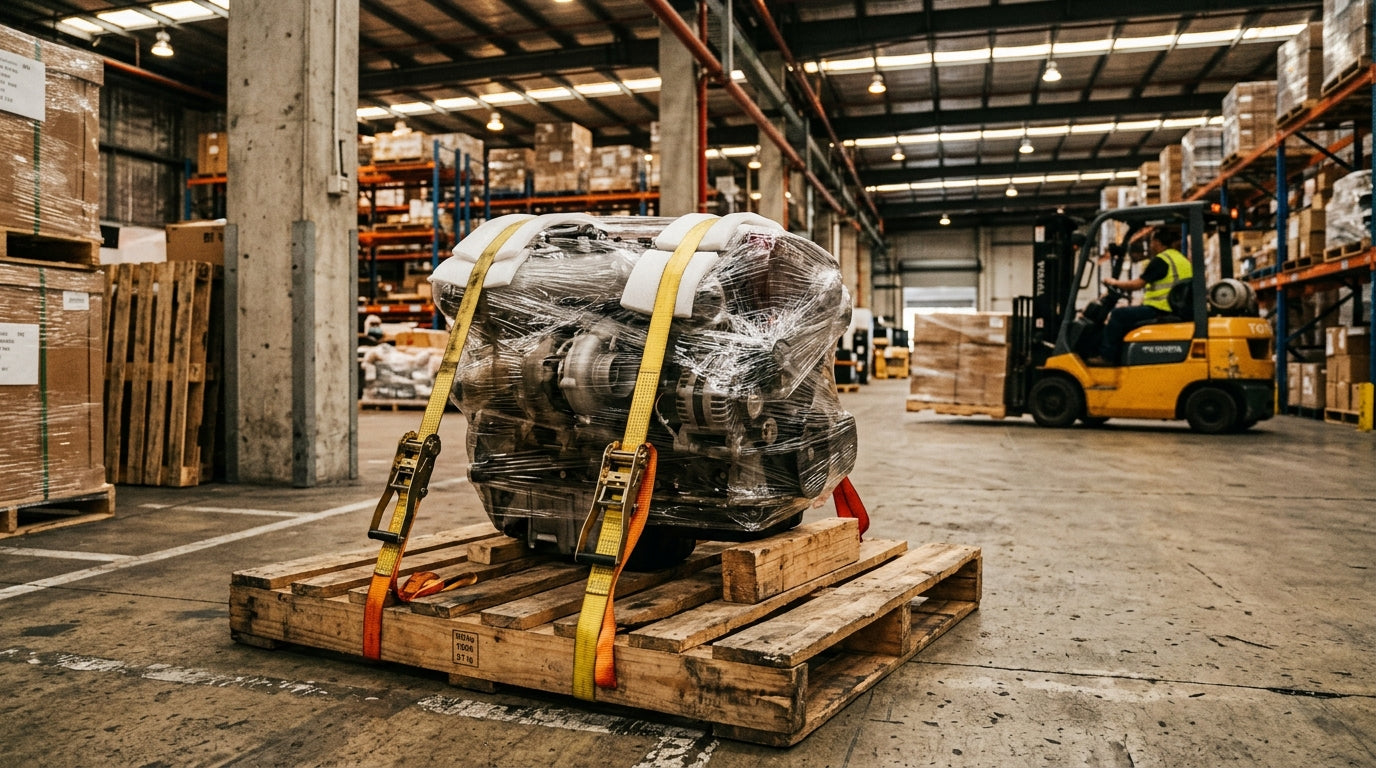
JDM engines ship via LTL freight — you'll schedule a delivery appointment, inspect the crate before signing, and document any freight damage. Our shipping guide walks through the full delivery process so you're prepared when the freight truck arrives.
See our full engine inventory
Browse K20A engines, WRX & STI engines, and the full JDM engine inventory. See also: installation checklist, break-in procedure after install.