Cart
0
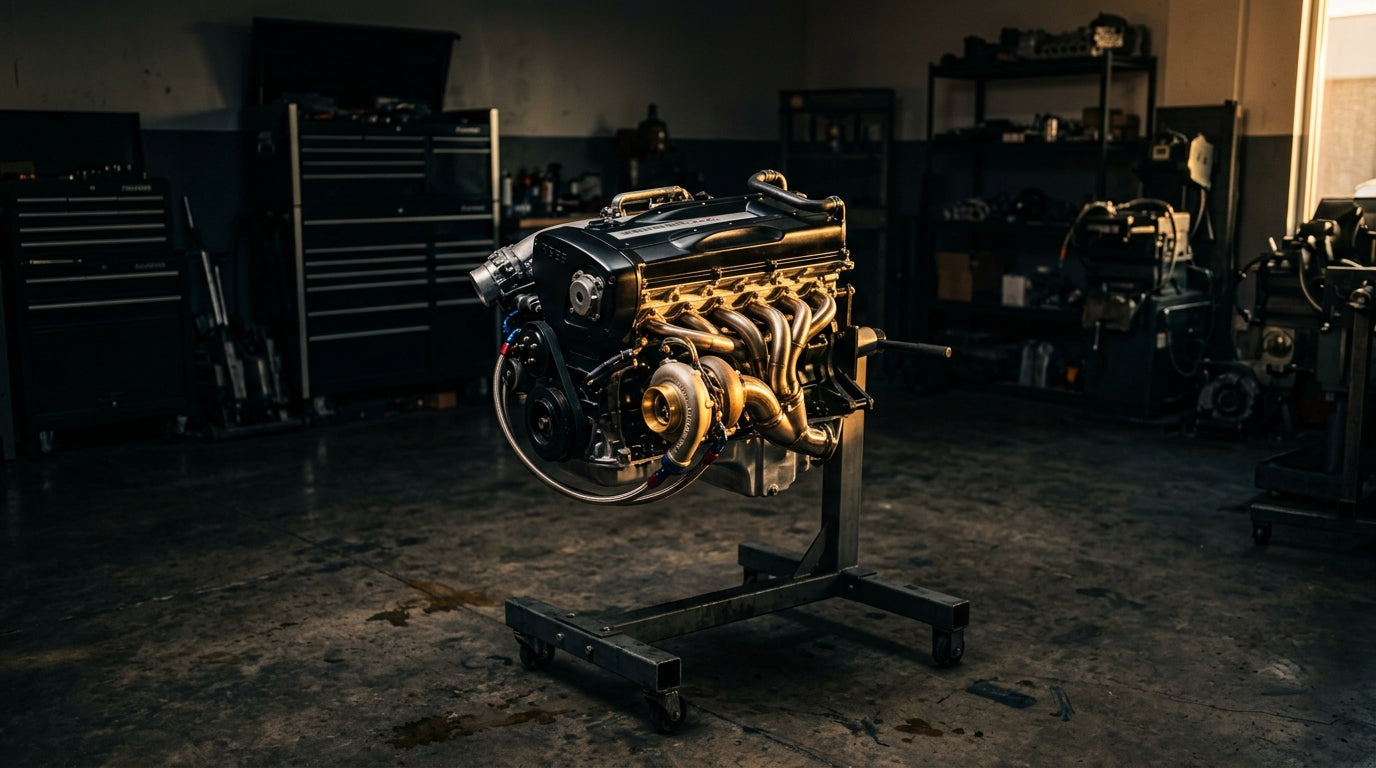
Toyota and Lexus share engines more directly than almost any other manufacturer pairing — the same 2GR-FE V6 appears in the Camry, RAV4, Highlander, and RX350, often with only minor ECU calibration differences between them. This guide maps every Toyota and Lexus engine family you'll encounter in the JDM import market: the legendary 2JZ inline-six and its overlooked sibling the 1JZ-GTE, the broadly reliable 2GR-FE V6, the flagship 3UZ-FE V8, and the modern 4-cylinders that cover the highest-volume replacement applications.
Browse Toyota & Lexus engines in stock → View current inventory
For a full deep dive on the 2JZ variants, see our dedicated 2JZ-GE vs 2JZ-GTE comparison. To understand how Toyota engine codes are structured, see our JDM engine codes guide.
1JZ-GTE — The Overlooked Twin-Turbo Inline-Six
The 1JZ-GTE is one of the most underrated forced-induction platforms in the JDM market. It consistently gets overlooked because it shares a family name with its more famous sibling — and that reputation gap is a genuine buying opportunity for builders who know what they're looking at.
Displacement is 2.5L, architecture is DOHC inline-six, and induction is sequential twin-turbocharged. In JDM specification the engine produced approximately 280 PS (276 hp), held to Japan's voluntary industry limit at the time, with torque output of roughly 363 Nm (268 lb-ft) and a redline around 7,000 rpm. The block uses iron construction shared across the JZ family — the same closed-deck rigidity that made JZ engines famous for surviving boost in stock form.
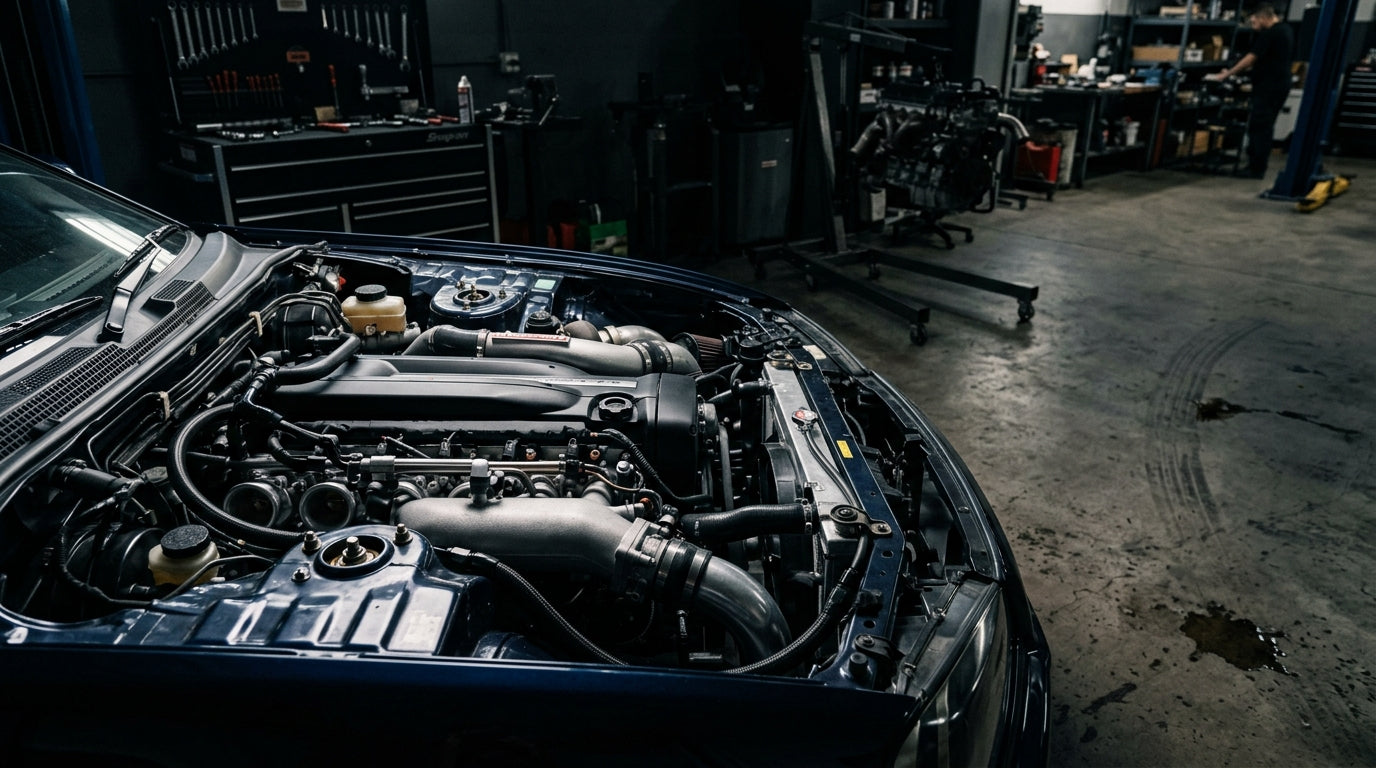
Applications span the most iconic JDM drift platforms of the 1990s and 2000s: JZX90 and JZX100 Chaser, Mark II, and Cresta. The Z30-generation Soarer also used the 1JZ-GTE. These are the same chassis that defined JDM performance culture, and the 1JZ-GTE is their factory engine.
The practical argument: the 1JZ-GTE fits the same engine bay as the 2JZ in many swap configurations, costs $800–$1,500 less to source, and pulls from the same aftermarket ecosystem — turbos, manifolds, ECU maps, and supporting components developed for the 2JZ will translate. With proper fueling, a single large turbo conversion, and a built top end, 500+ hp is documented on stock internals. For drift builds on a tighter budget, or anyone who wants JZ-family performance without paying 2JZ-GTE pricing, the 1JZ-GTE is the correct decision. See our turbo builds guide for a full platform comparison.
One spec to confirm before sourcing: there are VVT-i and non-VVT-i variants of the 1JZ-GTE. The later VVT-i version improves idle quality and low-end response through variable intake cam timing, but adds complexity at the head. Both are available as low-mileage JDM imports; know which you're ordering.
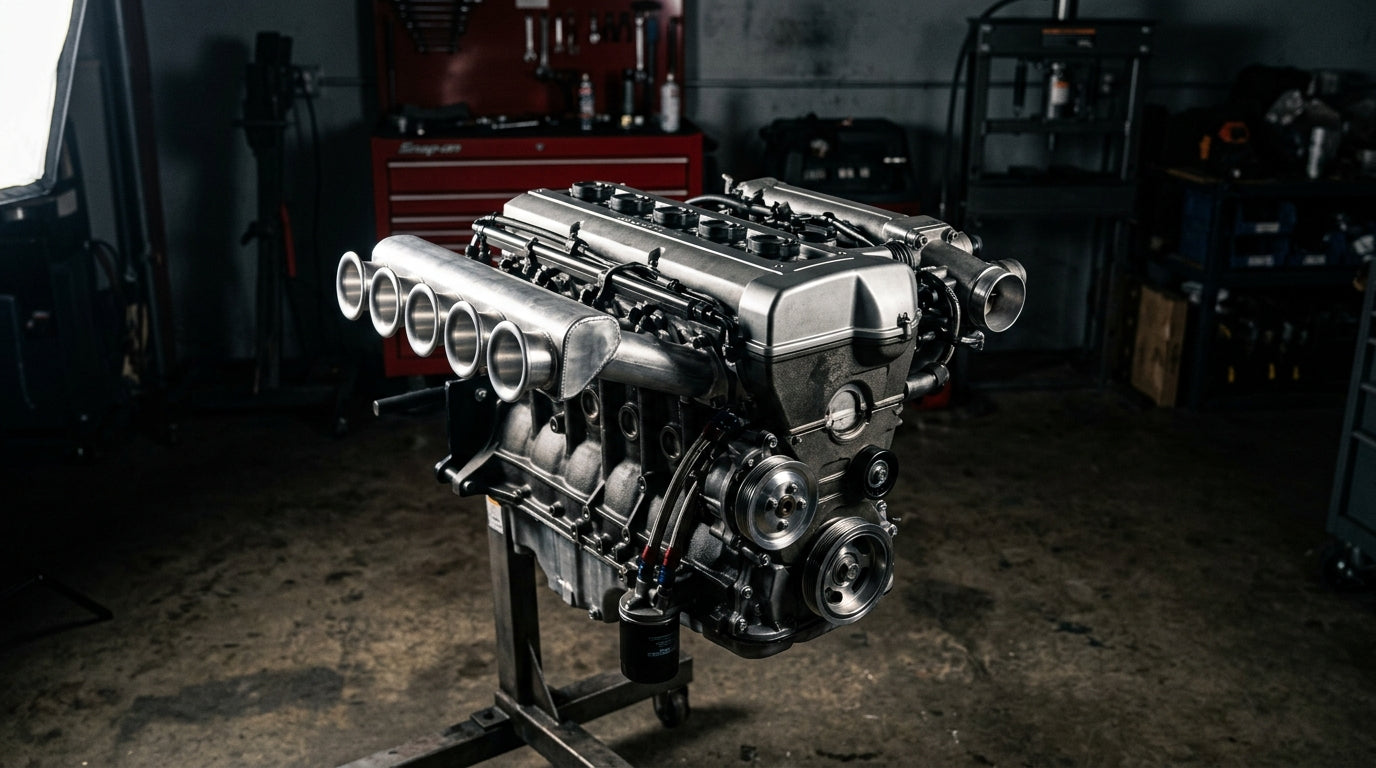
2JZ-GE vs 2JZ-GTE — Side by Side
Both engines share a 3.0L DOHC inline-six architecture with identical bore and stroke (86 mm × 86 mm), the same closed-deck iron block, and the same external footprint. The functional differences are significant. See our full 2JZ comparison post for granular detail; here is the condensed version for buyers.
| Spec | 2JZ-GE | 2JZ-GTE |
|---|---|---|
| Displacement | 3.0L | 3.0L |
| Induction | Naturally aspirated | Sequential twin-turbo |
| Compression ratio | 10.5:1 | 8.5:1 |
| Power (JDM spec) | ~220 PS | 280 PS |
| VVT-i | Yes (later variants) | No |
| Primary applications | IS300, GS300, Supra N/A, Crown | Supra JZA80, Aristo JZS147/160 |
Sourcing reality: The 2JZ-GTE is primarily pulled from two donor vehicles — the JZA80 Supra and the JZS-series Aristo (the Japanese-market predecessor to the Lexus GS twin-turbo). Aristo-sourced units reach the U.S. market in higher volumes and typically price $500–$1,500 below Supra-sourced units for the same mileage range. The 2JZ-GE, by contrast, is broadly available from IS300 and GS300 chassis and generally prices $800–$1,500 below the GTE.
On the "can I turbo a GE block" question: the closed-deck iron block is shared between both variants, and builders do run boosted 2JZ-GE setups. The lower compression ratio of the GTE block (8.5:1) is factory-engineered for boost headroom; the GE block at 10.5:1 requires more supporting work to manage detonation under boost. Consult a certified mechanic to confirm fitment and the correct fueling and tuning approach before beginning any forced-induction conversion on a GE block.
For up-to-date pricing, see our JDM engine cost guide.
2GR-FE — The Reliable V6 for Daily Applications
Toyota's 2GR-FE is the most broadly deployed V6 in the brand's modern lineup and the strongest daily-driver replacement choice in this catalog. Our reliability guide ranks it first among Toyota V6 options — and the track record backs that ranking.
Specifications: 3.5L DOHC V6, dual VVT-i applied to both intake and exhaust camshafts, aluminum block and head construction, approximately 270–280 hp depending on application variant. Bore is 94.0 mm, stroke is 83.0 mm. The dual VVT-i system — Toyota's variable valve timing on both cam banks simultaneously — improves fuel economy and low-end torque meaningfully compared to single-cam VVT-i predecessors. OBDII compatibility is straightforward for U.S.-market applications; ECU mapping is well-documented for all common Camry and Lexus variants.
Applications span a wide range: Camry V6 (XV40/XV50), RAV4 V6 (XA30), Highlander (XU40), Sienna (XL30), Tacoma V6, IS350, GS350, and RX350. That breadth translates directly into parts availability — supporting components for the 2GR-FE are among the easiest Toyota engine parts to source in the U.S. market regardless of where you are.
Documented real-world longevity exceeds 250,000 miles regularly when the engine is maintained on schedule. Two areas worth understanding on any used unit: VVT-i actuator condition affects cold-start cam timing and can generate cam-position fault codes if degraded; oil cooler line condition — primarily relevant on earlier Highlander and Sienna applications — should be inspected at installation. Neither is a disqualifier; both are addressable maintenance items.
Every 2GR-FE in our catalog is a quality-inspected, low-mileage JDM import, hand-selected from Japan and backed by our warranty. Japan's shaken inspection system keeps donor vehicles on a strict maintenance schedule, which is why JDM 2GR-FE units typically arrive with 40,000–70,000 miles — well below what comparable domestic replacements carry.
3UZ-FE — The Flagship V8
The 3UZ-FE is Toyota's 4.3L DOHC V8, used across the Lexus flagship lineup through most of the 2000s. Output was approximately 290–300 hp depending on variant, with torque around 430 Nm (317 lb-ft). The architecture is all-aluminum — block and heads — with a 90-degree V8 configuration, which distinguishes it from the iron-block JZ family and gives it a different weight and thermal profile.
Primary applications: LS430 (UCF30), SC430, and the GX470 in certain market configurations. The LS430 is the dominant donor for U.S. buyers — these vehicles were maintained rigorously in Japan and consistently produce low-mileage units. Confirm you have the 3UZ-FE and not the related 2UZ-FE (4.7L, used in Land Cruiser, 4Runner, Tundra, Sequoia, and some GX470 builds) before purchasing — both are UZ-family V8s but different displacement and different part numbers throughout.
Who buys this engine: LS430 and SC430 owners replacing a high-mileage original unit are the clearest fit — a low-mileage JDM replacement costs a fraction of a domestic rebuild. The second group is the V8 swap market: the 3UZ-FE has documented transplants into truck platforms, performance builds requiring a naturally-aspirated V8 with proven long-term reliability, and custom applications where compact V8 torque matters. Units are hand-selected from Japan with fast nationwide shipping; pricing typically ranges $1,500–$3,000 depending on documented mileage.
2AR-FE and 2ZR-FE — High-Volume 4-Cylinder Replacements
These two engines cover the largest segment of Toyota ownership in North America — Camry and Corolla platforms that represent the most common replacement scenarios in the 4-cylinder category.
The 2AR-FE is a 2.5L DOHC inline-four with dual VVT-i, producing approximately 178–181 hp depending on variant. Chain-driven, aluminum construction. Applications include the Camry (XV50), RAV4 (XA40), Venza, and Highlander 4-cylinder. Reliability documentation is excellent. For anyone replacing a high-mileage Camry 4-cylinder, the 2AR-FE is the direct sourcing decision with the lowest complexity.
The 2ZR-FE covers the 1.8L segment: Corolla (E140/E160), Matrix, Pontiac Vibe (shared Toyota platform), and xD. Also chain-driven, aluminum-block construction, with VVT-i on the intake camshaft. Availability is the highest in this displacement range, which keeps pricing competitive. Note: later 2ZR-FE applications with Toyota's Valvematic variable valve lift system carry the designation 2ZR-FAE — the Valvematic actuator is an additional component at the cylinder head. Confirm your specific variant before ordering to ensure correct part-number matching.
Toyota/Lexus Engine Buying Decision Table
| Use Case | Best Engine | Price Range | Availability |
|---|---|---|---|
| Daily driver V6 replacement | 2GR-FE | $800–$2,500 | High |
| Performance build / flagship swap | 2JZ-GTE | $2,500–$6,500 | Medium |
| Budget drift / forced induction build | 1JZ-GTE | $1,500–$3,500 | Medium |
| Luxury V8 replacement or swap | 3UZ-FE | $1,500–$3,000 | Medium |
| Camry / RAV4 4-cylinder replacement | 2AR-FE | $600–$1,800 | High |
| Corolla / Matrix 4-cylinder replacement | 2ZR-FE | $400–$1,400 | High |
Frequently Asked Questions
What is the difference between the 1JZ and 2JZ?
Displacement is the primary difference. The 1JZ is a 2.5L inline-six; the 2JZ is a 3.0L. Both families include naturally aspirated (GE suffix) and turbocharged (GTE suffix) variants built on the same closed-deck iron block architecture. The additional 500cc of displacement in the 2JZ translates to more low-end torque and a higher absolute power ceiling in built form. The 1JZ-GTE is the lighter, less expensive platform and the better choice for builds where budget or chassis weight distribution matters more than maximum output. Both engines run in the same JZ-family chassis — bay fitment is rarely the deciding factor between them.
Is the 2GR-FE a good engine swap?
For the right application, yes. The 2GR-FE works well in platforms that originally offered it — Camry-based chassis, Lexus IS350/GS350/RX350, and related Toyota V6 applications. It is less common as a cross-platform swap because the wider 60-degree V6 architecture and accessory packaging require more modification than swapping a straight-six into a narrower bay. For reliability-first builds or direct OEM replacements, it remains the top Toyota V6 in our catalog. See our reliability guide for context on how it compares across the full JDM catalog.
Can I use a 2JZ-GE block for a turbo build?
Yes, with the correct supporting work. The 2JZ-GE shares the same closed-deck iron block as the GTE — the block architecture is not the limiting factor. The differences are in compression ratio (10.5:1 GE vs 8.5:1 GTE), head port sizing, and the absence of the factory sequential twin-turbo system and its associated oil and coolant routing. Forced-induction builds starting from a GE block typically address compression through a thicker head gasket or lower-compression pistons, add an aftermarket turbo manifold and turbocharger, and require a full ECU remap. Consult a certified mechanic to confirm fitment and the supporting modifications required before beginning any turbo conversion on a 2JZ-GE.
How do I verify a 2JZ-GTE has not been rebuilt or modified before I receive it?
The most reliable signal is sourcing from a seller who traces the unit back to a documented Japanese donor vehicle. Our 2JZ-GTE units are hand-selected from Japan with documented origin — we do not trade in unknown-history domestic engine cores. When evaluating any used unit, look for consistent external condition: no obvious machining marks on mating surfaces, no paint overspray near gasket areas, and matched-set hardware throughout. An OBD-II scanner connected after installation can read live sensor data — fuel trims, cam position, knock correction — that help confirm the engine is operating correctly before you put significant miles on it. For a complete pre-purchase checklist, see our 10 questions to ask before buying guide.
All Toyota and Lexus engines in our catalog are quality-inspected, low-mileage JDM imports sourced directly from Japan. Every unit is backed by our warranty and ships fast nationwide. Browse current Toyota & Lexus inventory →