Cart
0
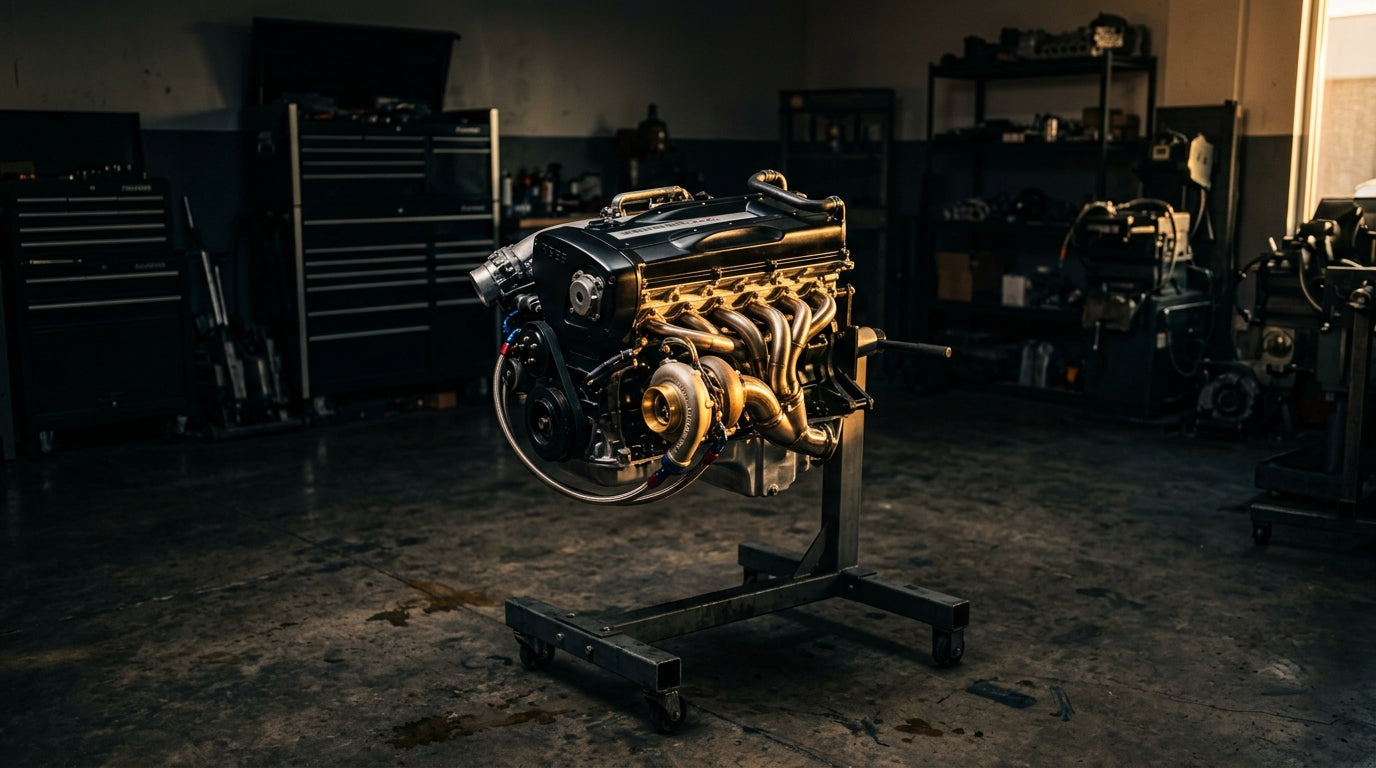
If you've shopped for an engine swap, you've probably seen the same code sold as both "JDM" and "USDM" — and wondered what the real difference is. Short answer: usually less than you'd think, but for certain codes it can matter a great deal. This is a companion piece to our complete guide to JDM engines.
Ready to find your engine? Browse our JDM engine inventory →
Same family, different market
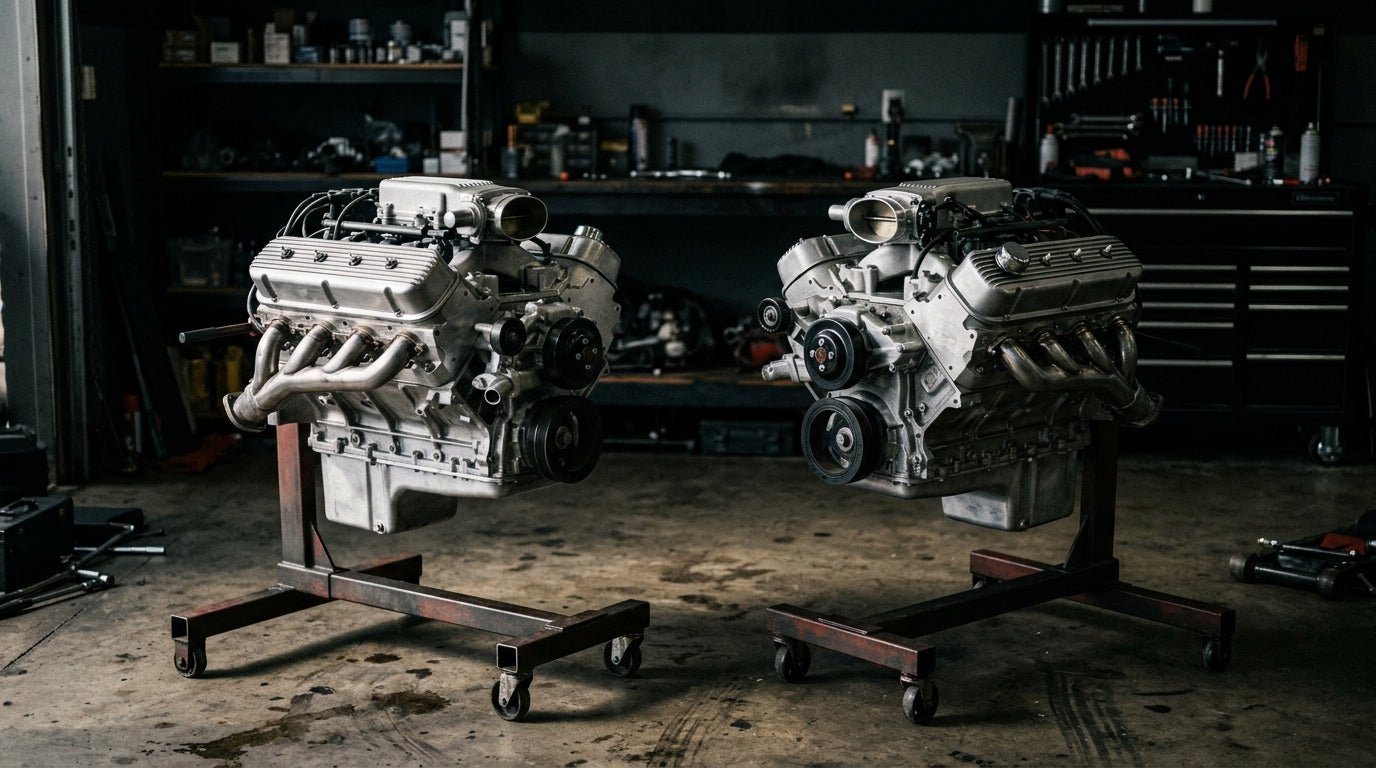
"JDM" and "USDM" describe where an engine was originally sold, not a fundamentally different design. Understanding how JDM engines are sourced from Japan helps clarify why these market variants exist. A Honda K20A sold in a Japanese-market Integra Type R and a K20A2 sold in a U.S.-market Acura RSX Type-S are close relatives from the same engine family, sharing the same basic block and head architecture — but they can carry meaningfully different specs, as we cover in our engine codes guide.
Where the real differences show up
| Factor | Why it differs |
|---|---|
| Output tuning | JDM-market trims sometimes received a higher-compression head or different cam profile than the equivalent U.S. trim of the same base engine, especially on performance-oriented models. |
| Emissions equipment | USDM engines are built to meet EPA/CARB requirements; JDM engines meet Japanese emissions standards, which can mean different intake, exhaust, or ECU calibration. |
| Mileage at time of sale | A market/ownership-culture difference, not a hardware one — see our piece on what "low-mileage" actually means. |
| Available trims | Some of the most sought-after variants (Type R-spec engines, for example) were sold only in Japan and never officially imported to the U.S. as a factory option. |
A real example: Honda's K20A family
The K20A story is a good illustration of how confusing "JDM vs. USDM" naming can get. The JDM Integra Type R (DC5) and Civic Type R (EP3/FD2) used a high-output K20A tune with a Type R-spec head. The U.S.-market Acura RSX Type-S used the related but distinct K20A2, tuned differently and generally producing less peak output. Both are legitimately "K20A-family" engines, but they are not interchangeable in terms of output, and casual sellers sometimes blur the line between the two. Always confirm the exact sub-code, not just the family name, on any listing.
More real examples across manufacturers
The K20A story isn't unique — the same pattern shows up across brands:
- Nissan VQ35DE: the JDM 350Z and USDM 350Z both used VQ35DE-family engines, but specific sub-variants carried different output ratings depending on model year and market calibration, similar to the spread we document in our engine codes guide.
- Subaru EJ255: the WRX's EJ255 saw different factory tunes across JDM and USDM markets and even across USDM trims (Forester XT vs. WRX vs. Legacy GT), despite sharing the same base code.
- Toyota 2JZ-GE: the naturally aspirated 2JZ-GE was tuned somewhat differently across the Supra, Lexus SC300, GS300, and IS300 despite being fundamentally the same engine family.
The pattern across all of these: the base engine architecture travels well between markets, but the specific tune, output, and sometimes emissions hardware can vary meaningfully by trim — which is exactly why confirming the full code (not just the family) matters.
How the JDM vs. USDM difference affects cost
JDM-only variants (like the K20A Type R) often command a premium due to limited availability. See our JDM engine cost guide for current pricing by engine family.
Does the difference matter for your build?
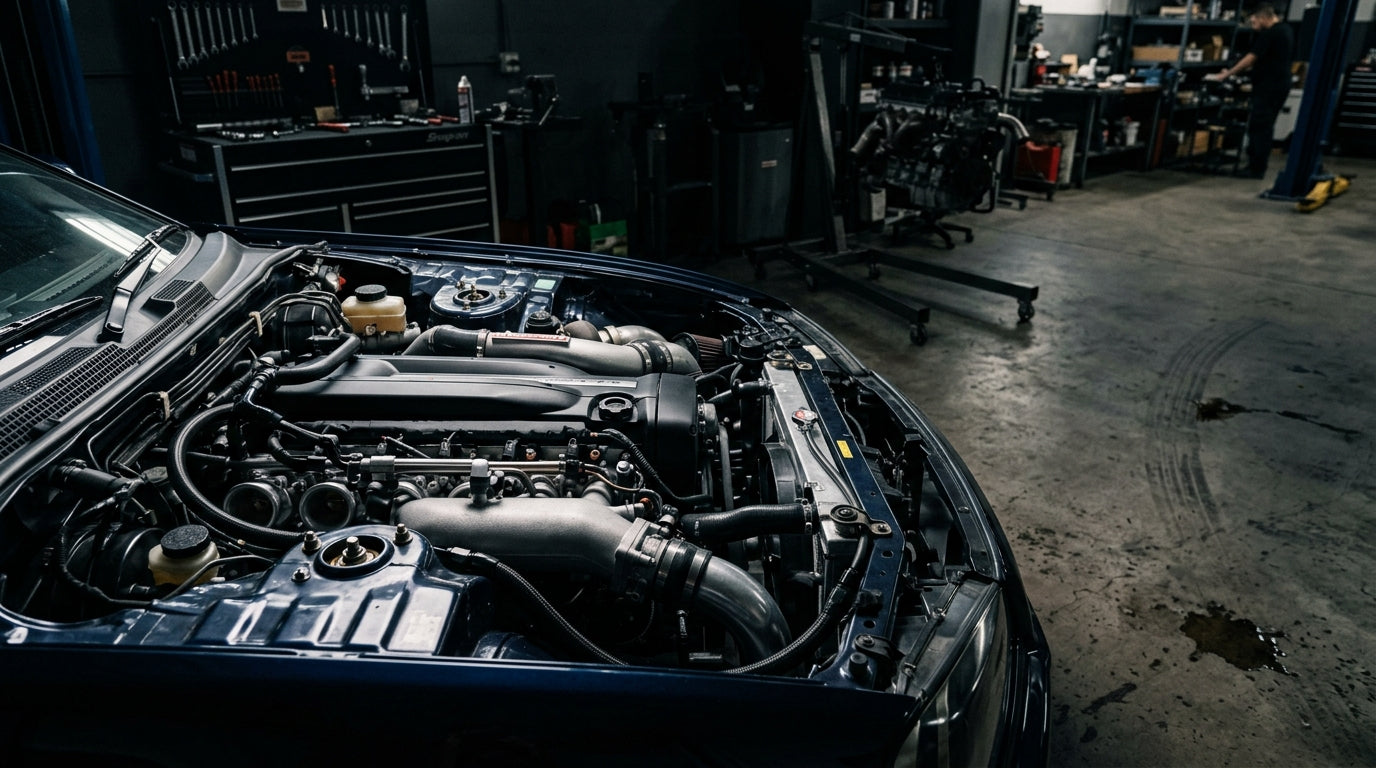
For a straightforward like-for-like replacement, a JDM or USDM engine of the correct code will both do the job. Where it matters is when you're chasing a specific output figure, trying to match emissions equipment for a smog-check state, or building toward a documented spec for resale value — in those cases, knowing exactly which variant you're buying (not just the base code) is essential. Use our pre-purchase checklist to vet any listing.
Frequently asked questions
Can I install a JDM engine in a USDM car?
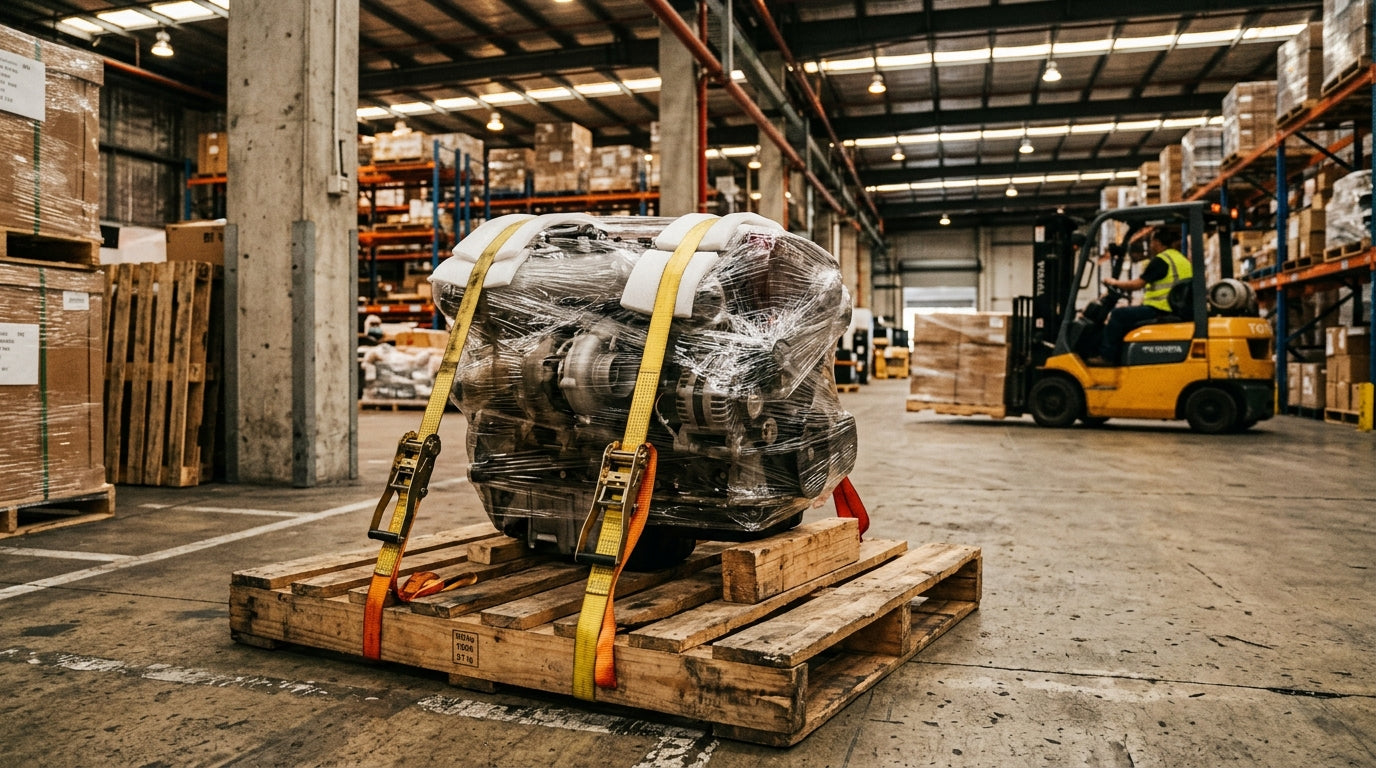
In most cases, yes, as long as the engine code is compatible with your chassis and you handle the wiring/ECU pairing correctly — this is standard practice in engine swaps. State-specific emissions and vehicle-age rules still apply.
Are JDM engines more powerful than USDM engines?
Sometimes, but not universally. It depends entirely on the specific code and trim. Some JDM variants do carry a genuine factory output advantage; others are essentially identical to their USDM counterpart.
How do I find out which exact variant I'm looking at?
Check the full code stamped on the engine (not just the family prefix), and compare it against manufacturer documentation or a reputable engine-code reference like our engine codes guide.
Shop by engine code
Browse our current JDM engines for sale, including popular codes like K20A, VQ35DE, and EJ255.