Cart
0
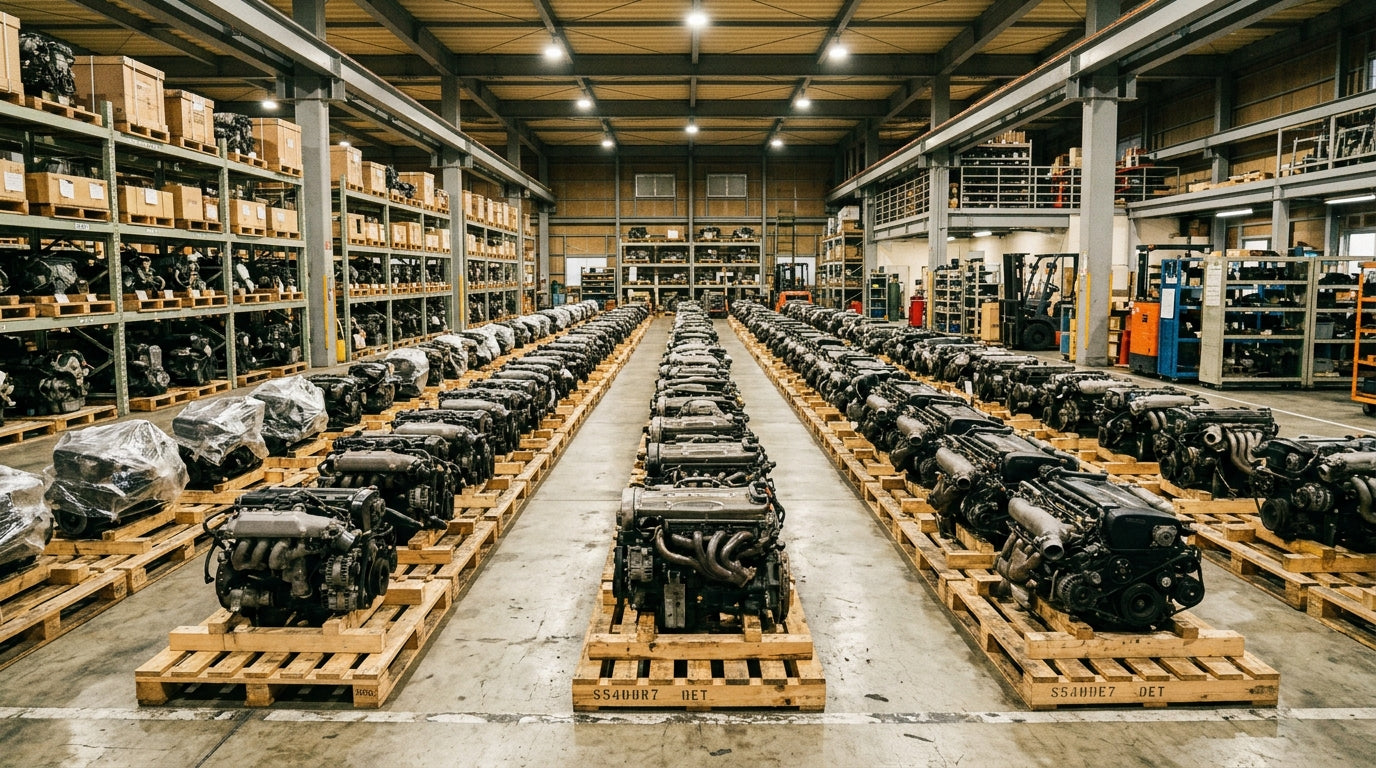
JDM engine prices can range from under a thousand dollars to well over five thousand, and the spread makes sense once you understand what drives it. This post is part of our complete guide to JDM engines.
Browse our current inventory: JDM engines in stock →
Real current price ranges by category
Based on our own current inventory, here's what buyers should generally expect to pay across engine categories:
| Category | Typical range | Median |
|---|---|---|
| Standard 4-cylinder | $69 – $4,999 | ~$1,349 |
| V6 | $499 – $3,299 | ~$1,599 |
| Performance / turbo codes (K20A, EJ255/257, FA20DIT, SR20, RB25, 4B11, VQ37, 2JZ) |
$749 – $6,499 | ~$1,699 |
These figures reflect our current in-stock catalog and will shift over time as inventory turns over — check our current listings for exact pricing on the specific code you need.
What actually drives the price within these ranges
- Engine code and demand: widely-swapped performance codes (like Honda's K20A or Subaru's EJ255) tend to command a premium over common commuter-car engines within the same displacement class.
- Rarity: JDM-only trims that were never officially sold in the U.S. are harder to source and priced accordingly.
- Mileage and documentation: lower mileage and clearer sourcing history typically cost more. See what "low-mileage" really means.
- What's included: a bare engine costs less than a matched set with the transmission, wiring harness, and ECU included — see our guide on choosing what to buy.
- Sourcing and import costs: the auction-to-export pipeline we cover in how JDM engines are sourced factors into the final price.
Typical price ranges by manufacturer
Pricing also varies meaningfully by manufacturer, largely reflecting demand and typical displacement/configuration mix in that brand's lineup:
| Make | Typical range | Median |
|---|---|---|
| Toyota | $69 – $3,299 | ~$1,349 |
| Subaru | $799 – $4,999 | ~$1,499 |
| Honda | $89 – $4,999 | ~$1,274 |
| Nissan / Infiniti | $100 – $6,499 | ~$999 – $1,699 |
| Acura / Lexus | $749 – $3,299 | ~$1,399 – $3,299 |
These reflect our current in-stock catalog and shift as inventory turns over. Acura's higher median in particular reflects a current mix weighted toward V6 engines, which command a premium over smaller inline-4s.
Hidden costs to budget for
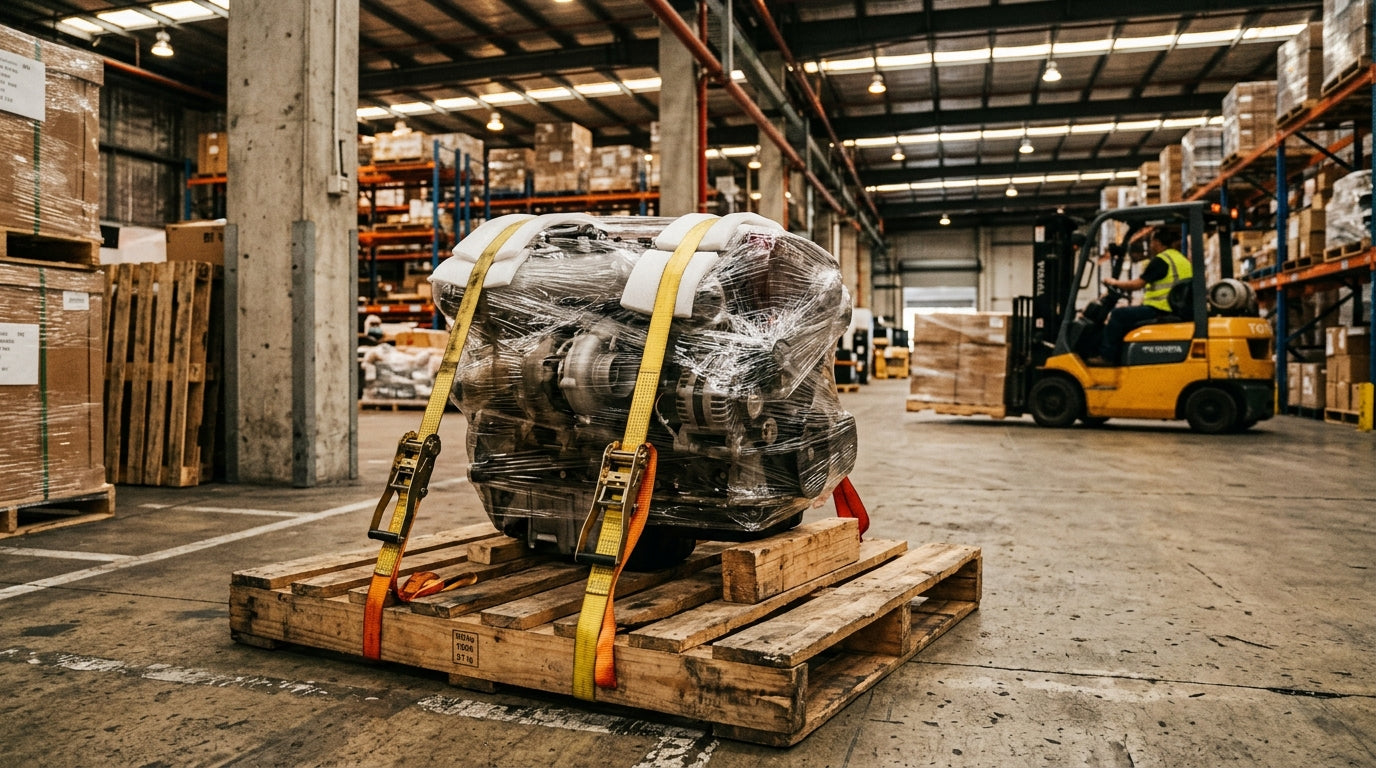
- Freight/shipping: engines are heavy; confirm whether this is included or quoted separately. Our shipping guide explains what to expect from order to delivery, including LTL freight specifics.
- Mounts and adapter parts: especially relevant for cross-chassis swaps, where factory mounts won't carry over directly.
- Fluids and gaskets: a fresh install typically needs new oil, coolant, and often a valve cover gasket at minimum. See our installation checklist for a full list of what you'll need at the point of install.
- Labor: if you're not installing it yourself, get a labor quote before you buy the engine, not after.
- Tuning: cross-chassis swaps often require ECU tuning to resolve driveability issues; factor this into your total budget.
How to spot a fair price
Compare listings for the exact same engine code and generation — not just the family. A bare engine and a full engine/transmission/harness package for the "same" code can have very different price points for good reason, so make sure you're comparing equivalent listings. If a price looks unusually low relative to the ranges above, check whether the listing actually includes a warranty; see our JDM engine warranty guide for what to expect. For guidance on which codes have the best reliability track records for the money, see our reliability ranking.
Budgeting beyond the engine price
The sticker price on the engine itself is rarely the full cost of a swap. Depending on your project, budget for shipping/freight, any additional parts not included in the listing (mounts, gaskets, fluids), and labor if you're not installing it yourself. Getting a full quote before committing avoids surprises partway through a build.
Don't buy on price alone
The cheapest listing isn't always the best value once you factor in warranty coverage, documentation, and shipping reliability. Our 10 questions to ask before buying covers what to check before you commit.
Frequently asked questions
Why do two listings for the same engine code have different prices?
Usually because of what's included (bare engine vs. matched transmission/harness/ECU), documented mileage, and warranty terms — not just seller markup.
Is it worth paying more for a documented low-mileage unit?
Generally yes, especially for an engine going into a daily driver rather than a track-only build, since it reduces the likelihood of near-term internal wear issues.
How long should I expect a JDM engine to last at a given price point?
For mainstream naturally aspirated engines like the K24A, 2GR-FE, or VQ35DE arriving with 50,000–70,000 documented miles, a realistic remaining lifespan is 100,000–150,000+ additional miles with proper maintenance. See our JDM engine lifespan guide for a full breakdown by engine family.
Is a less expensive JDM engine less reliable?
Not necessarily. The price difference between a common-code engine like the VQ35DE and a rare performance engine like the 2JZ-GTE reflects demand and scarcity, not a reliability hierarchy. See our reliability guide for an honest assessment of which engine families are the most durable regardless of price point.
Shop current inventory
Browse our JDM engines for sale by make, model, or engine code to compare pricing directly.