Cart
0

Subaru's EJ engine family is one of the most confusing lineups to navigate from the outside — the codes look similar, the applications overlap, and the differences between variants can be subtle or enormous depending on which two you're comparing. This guide maps the whole family, focusing on the variants you'll actually encounter in the JDM import market. It's a companion piece to our EJ255 vs EJ257 comparison and our full engine codes guide. For the complete Subaru lineup, see our JDM Subaru engines guide.
Ready to find your Subaru engine? Browse our JDM engine inventory →
The EJ family overview
All EJ engines are horizontally-opposed ("flat" or "boxer") four-cylinders. The name breaks down as: EJ = engine family; the number after indicates displacement (EJ20 = ~2.0L, EJ25 = ~2.5L); letters that follow indicate specific sub-variants covering turbo vs. NA, open vs. closed deck, SOHC vs. DOHC, and generation changes.
Key EJ variants at a glance
| Code | Displacement | Turbo? | Main applications |
|---|---|---|---|
| EJ20 | 2.0L | Various (see sub-codes) | JDM WRX, Legacy, Forester |
| EJ205 | 2.0L | Yes (DOHC turbo) | JDM WRX (GDA/GDB) |
| EJ207 | 2.0L | Yes (DOHC twin-scroll turbo) | JDM WRX STI (GDB Spec C/D/E/F) |
| EJ25D | 2.5L | No (DOHC NA) | Legacy, Outback, Impreza 2.5 |
| EJ255 | 2.5L | Yes (DOHC turbo, open deck) | USDM WRX, Legacy GT, Forester XT |
| EJ257 | 2.5L | Yes (DOHC turbo, semi-closed deck, forged) | WRX STI (2004–2021) |
The JDM vs USDM split in Subaru EJ engines
This is where Subaru's lineup gets genuinely confusing for buyers: the Japanese domestic market WRX used the EJ20-family engines (2.0L, because Japanese tax regulations historically favored engines under 2.0L), while the USDM WRX got the EJ255 (2.5L). The STI was the exception — it used the EJ207 (JDM) or EJ257 (USDM), both 2.0L and 2.5L respectively, both with performance internals. See our deeper comparison in JDM vs USDM engines.
EJ205 and EJ207: the JDM-only performance codes
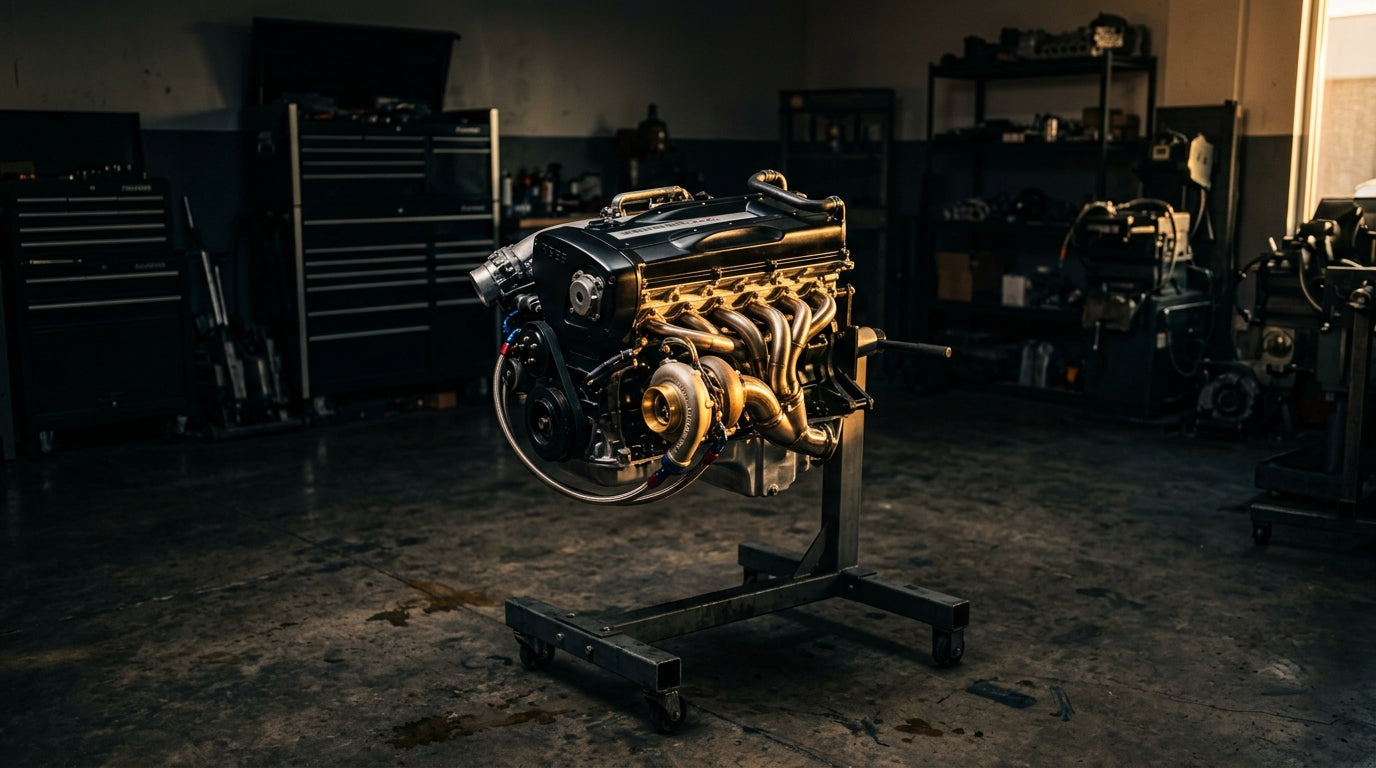
The EJ205 is the JDM WRX engine — a 2.0L DOHC turbo that's genuinely different from anything that came to the U.S. officially. It's prized by builders who want a 2.0L turbo Subaru that wasn't available in USDM trim. The EJ207 goes further, with twin-scroll turbo technology and forged internals in the JDM STI chassis — it's one of the most technically interesting Subaru engines available in the import market and is sought after for high-power builds where the displacement restriction isn't a limitation.
Head gasket: the EJ-family reality check
Any EJ engine guide that doesn't mention head gaskets isn't being honest with you. The EJ family — especially EJ25 variants — has a well-documented head gasket sensitivity, particularly the two-layer MLS (multi-layer steel) gasket used in earlier units. This is not a reason to avoid EJ engines; it's a reality to price into your purchasing decision. For a full rundown of documented EJ issues and what to watch for, see our common JDM engine problems guide. For the most durable options when reliability is the top priority, see our reliability rankings. Many EJ engines on the market have already had head gaskets replaced by a previous owner, which is worth asking about specifically.
Frequently asked questions
Which EJ engine is the most reliable for a daily driver?
The EJ25D (naturally aspirated) has the simplest architecture and fewest high-stress components, making it the most docile in daily use. Among the turbo variants, a well-maintained EJ255 or EJ207 at stock boost is a durable daily driver; it's when they're pushed hard or neglected that problems emerge.
What should I do before installing my EJ engine?
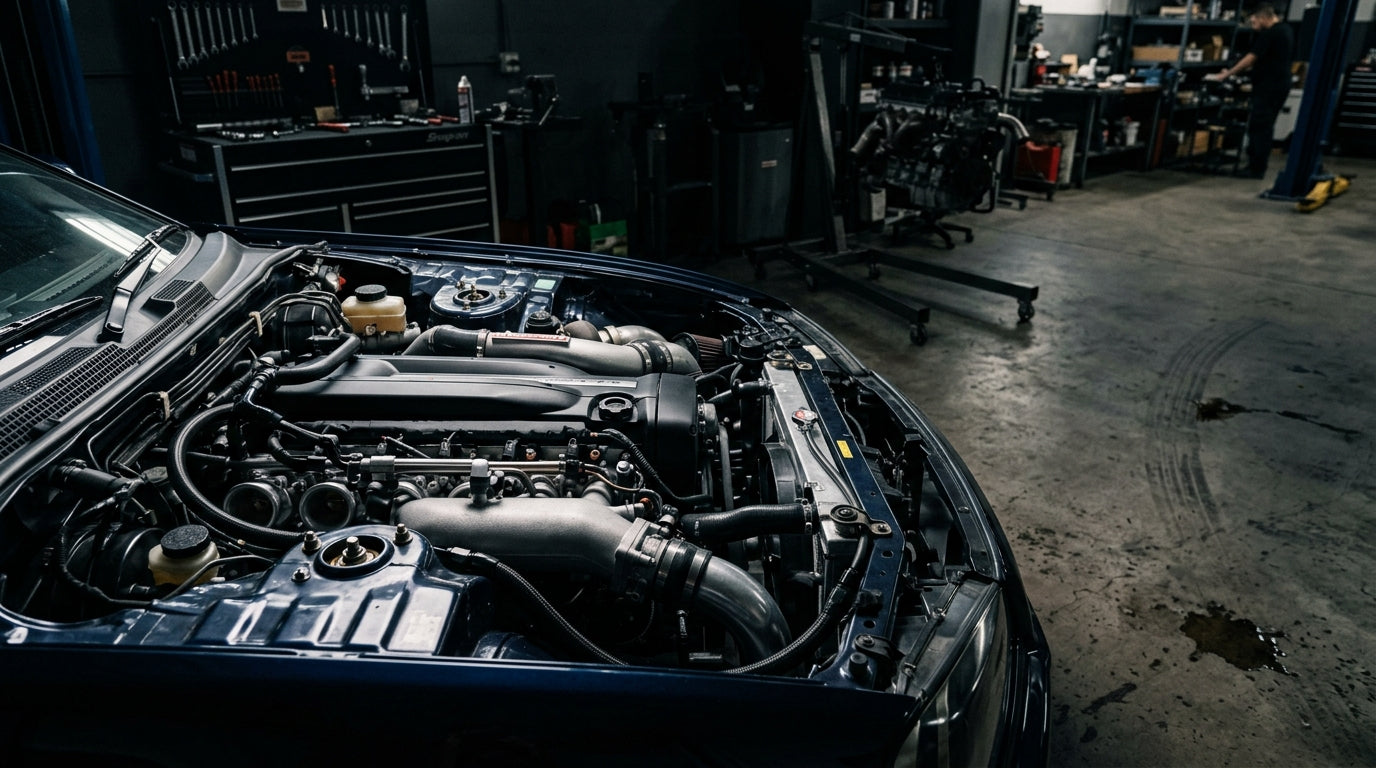
Before you start the car for the first time, work through a proper installation process. See our 20-step JDM engine installation checklist and consult a certified mechanic to confirm fitment for your specific chassis.
Are FA-series engines better than EJ-series engines?
They're different, not strictly better — the FA family (FA20DIT, FA24) brings direct injection and more modern architecture, while the EJ family is better-documented for high-power builds with decades of aftermarket development. Which is "better" depends entirely on your application.
What does the EJ207 cost compared to EJ257?
The EJ207 commands a premium because it's a JDM-only engine that never came in USDM trim — availability is more limited. See our cost guide for current pricing context.
Shop Subaru engines
Browse EJ255, FA20DIT, FA24, and the full Subaru engine lineup. See all JDM engines for sale.